
Construction & PropTech ➜ ➜ Services de télésurveillance connectée et de téléassistance par abonnement pour le marché résidentiel et les entreprises de taille moyenne en France.
Vous voulez un mémo détaillé et personnalisé sur cette société ?
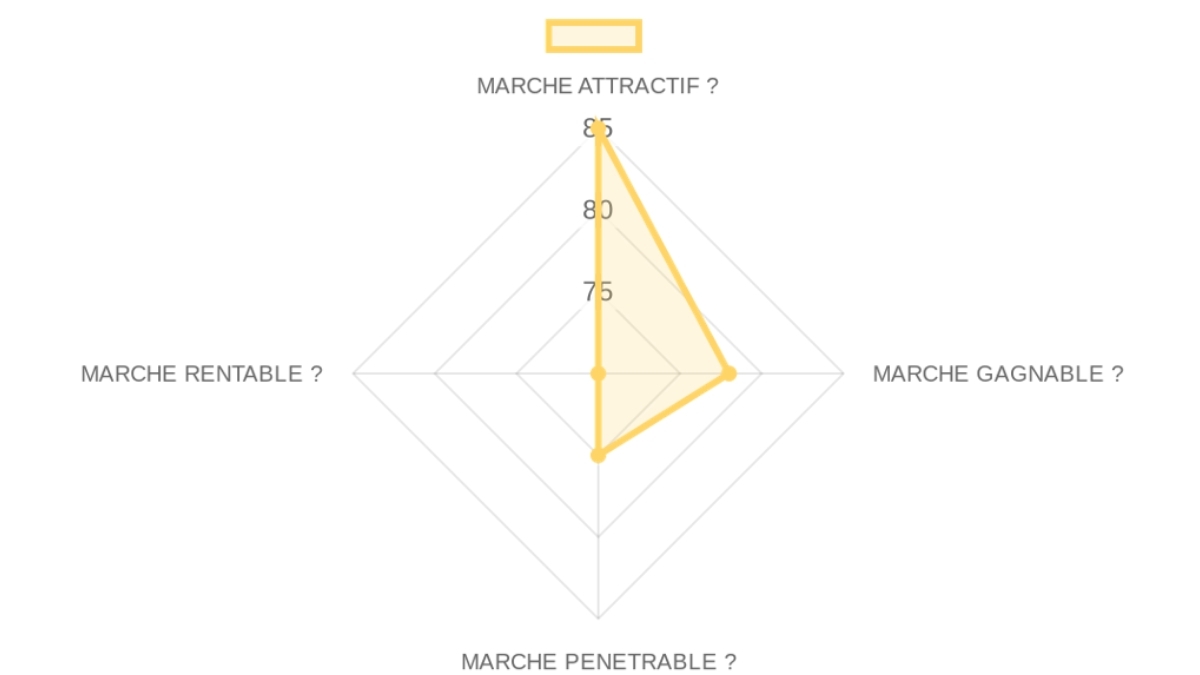
Résumé du marché
Analyse approfondie de l'entreprise
Proposition de valeur
Proposition de Valeur
Accompagnement à 360 degrés en sécurité, de l'installation à la gestion post-intrusion, avec une expertise de plus de 35 ans en sécurité bancaire.
Profil Client Idéal (ICP)
Particuliers (maisons, appartements, seniors) et Professionnels (PME, industrie, tertiaire, distribution, agences bancaires).
B2B ou B2C
Hybride (B2B pour les entreprises/banques et B2C pour la protection domestique et la téléassistance).
Industrie
Sécurité et Télésurveillance.
Contact et Légal
Siège à Coulaines/Savigné l'Évêque. Présence nationale partout en France. fr.linkedin.com .
Exemples de Clients Clés et Témoignages
Plus de 5885 avis clients. Citations: 'Excellente qualité des techniciens', 'Installation très professionnelle'. Partenariat historique avec le secteur bancaire.
Produit
Solution Principale
Systèmes d'alarme connectés avec télésurveillance 24h/24 et téléassistance pour seniors.
Encyclopédie des Fonctionnalités
Installation et maintenance | Télésurveillance 24/7 | Intervention sur alarme | Gardiennage | Protection du Travailleur Isolé (PTI) | Détection fumée connectée | Vision nocturne infrarouge | Alarme panique.
Capacités Techniques:
Cas d'Usage
Protection contre les cambriolages et incendies, maintien à domicile des personnes âgées, sécurité des agences bancaires et des travailleurs isolés.
Modèle économique
Analyse du Modèle d'Affaires
Abonnement mensuel (SaaS - Security as a Service).
Flux de Revenus et Tiers de Tarification
Offre Ma Protection Maison à partir de 21.90€ / mois. Formules de téléassistance (Domicile, Aidant, Mobile). Formule Domicile: sans engagement. Formule Mobile: engagement de 12 mois.
Caractéristiques des Forfaits
Crédit d'impôt possible (50%) pour la téléassistance (services à la personne). Parrainage offrant 2 mois gratuits.
Coûts Cachés et Conditions
Option intégrale potentiellement plus chère que l'option initiale.
Équipe
Culture d'Entreprise
Valeurs fondatrices de respect, exigence et passion. Collectif au service du client, innovation pour le 'mieux vieillir' et l'habitat sûr.
Analyse de l'Équipe
Filiale du Crédit Agricole. Experts répartis en techniciens, commerciaux, opérateurs de télésurveillance et chargés d'écoute. Marc Oppenheim (Directeur Général nommé janvier 2025), succédant à Jean-Charles Leyris.
Offres d'Emploi et Titres
Conseiller Commercial Sécurité, Responsable de domaine SI, Acheteur, Chargé Marketing Entreprises, Alternance Support Commercial.
Effectif Estimé
720 collaborateurs mobilisés au quotidien sur l'ensemble du territoire français.
PDG
Résumé de l'entreprise
Résumé de l'entreprise
- Security Systems and Remote Monitoring > Managed Security & Telecare Services
- B2B, B2C > Subscription, HaaS, Managed Services
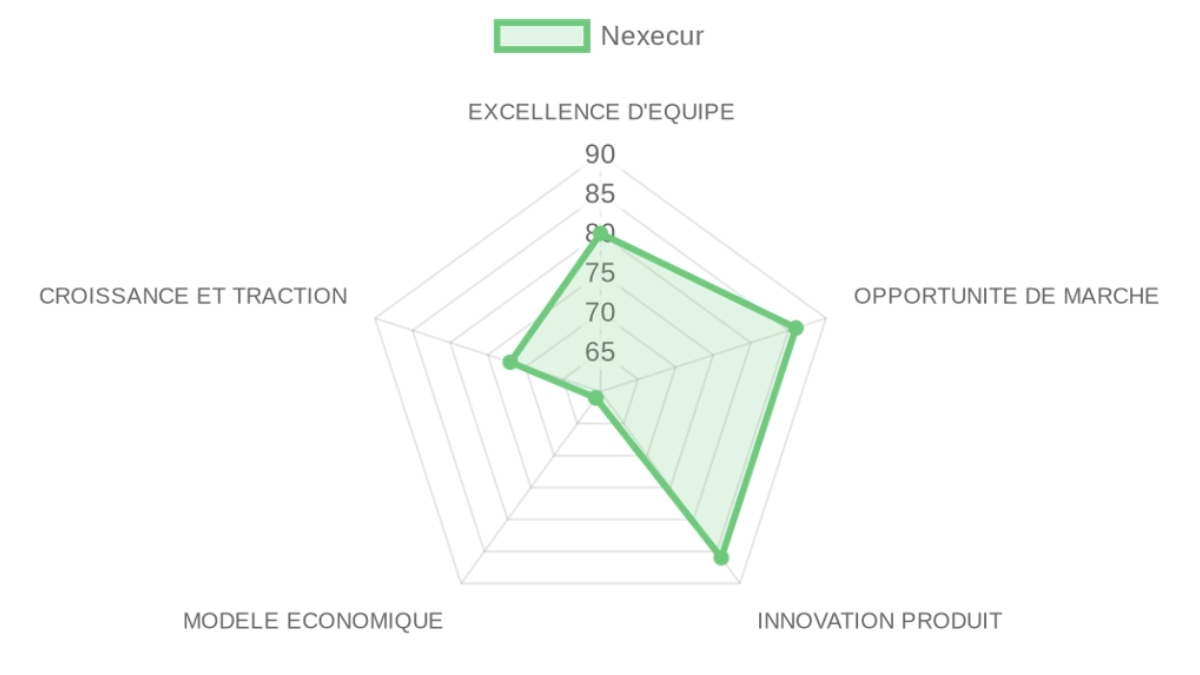
PRE-SCREENING SCORE
Thesis : Investment Criteria
❓ In a NUTSHELL : is a Managed Security & Telecare provider that enables French homeowners and SMBs to protect their property and people by offering an integrated, 24/7 monitored alarm and assistance service backed by a major bank.
⚠️ The PROBLEM : A homeowner worries about a break-in while on vacation, or the child of an elderly parent living alone fears a fall with no one around to help, but setting up and managing separate, reliable security and medical alert systems is complex, expensive, and fragmented.
✅ The SOLUTION : provides a single subscription for professionally installed hardware (sensors, panic buttons) and a service where human operators all alerts 24/7, dispatching security or medical help immediately when a real emergency is confirmed.
🚀 The GTM : The company primarily uses a direct and partner-led sales motion, targeting French homeowners and SMBs through the immense distribution channel and trusted brand of its parent, Crédit Agricole, which is the smartest entry point because it dramatically lowers customer acquisition cost and overcomes the trust barrier inherent in the security sector.- Founder-Market Fit85/100× 25%The analysis of key executive Loris Maurin reveals a seasoned digital growth operator with 15+ years of experience in scaling companies like Mon Chasseur Immo; his Earned Secret is mastering performance-driven growth in established verticals, though he is not the CEO which tempers this score's relevance to the top leadership role.
- Track Record80/100× 25%The company is a 40-year-old subsidiary of Crédit Agricole, a testament to stability and long-term viability, which serves as a proxy for a track record in lieu of founder-led startup exits.
- Leadership85/100× 25%is a large organization with 720 employees, indicating a mature leadership structure capable of managing scaled operations, with key roles like Security Technicians and Monitoring Operators forming a robust operational backbone.
- Completeness80/100× 25%As a mature subsidiary, the team appears complete with a full C-suite (though not detailed in inputs) and a strong balance of technical, sales, and operational staff, evidenced by diverse job openings from HR to Enterprise Business Managers.
- Size & Growth90/100× 25%The European Managed Security Services (MSS) market is a massive US$15.6 billion SAM, with a compelling CAGR of 10.8%, complemented by the similarly growing telecare market, indicating a vast and expanding opportunity.
- Timing Why Now90/100× 25%The timing is driven by a convergence of irreversible trends: an aging population in Europe creating massive demand for telecare, and rising cyber/physical threats for SMBs, both of which are pushing buyers towards managed, professional solutions.
- Competition85/100× 25%The landscape includes major players like Verisure and a fragmented set of local installers, but carves out a defensible position through its integrated Security+Telecare offering and its exclusive distribution and brand halo via parent Crédit Agricole.
- Expansion85/100× 25%Growth is pursued via synergies within the Crédit Agricole group and industrial partnerships rather than aggressive M&A, with clear vectors to expand service offerings to the existing large customer base and deepen penetration in the French market.
- Differentiation70/100× 25%The core differentiation is not a unique feature, but the bundled offering of home security, fire detection, and telecare-as-a-service, all from a single, trusted provider with deep roots in the French market.
- Product-Market Fit85/100× 25%Exceptional PMF is evidenced by over 5,582 customer reviews averaging 4-5 stars, with specific praise for professional technicians and user-friendly mobile apps, demonstrating strong user acceptance in a mature market.
- Scalability80/100× 25%The service is delivered via a scalable model of centralized monitoring centers and a national network of technicians, with mobile apps like Ma Protection Maison indicating a platform-based approach to managing a large client base.
- IP & Barriers65/100× 25%The primary barrier is not patents but operational scale, brand trust inherited from Crédit Agricole, and regulatory compliance (e.g., NF DAAF standards), which are significant but not insurmountable technical moats.
- Unit Economics90/100× 25%Pricing is clearly visible with plans starting from €21.90/month, built on a classic subscription model that ensures predictable, recurring revenue from a large customer base.
- Revenue Model95/100× 25%The company operates on a powerful SaaS-like recurring revenue model with a reported turnover of ~€99M in 2023, demonstrating a highly effective and scaled monetization strategy across both B2C and B2B segments.
- Monetization90/100× 25%Clear monetization is achieved through tiered plans (Initial vs Integral) that create an upsell path, and a 50% tax credit on telecare services acts as a powerful government-subsidized incentive, lowering the net cost for a key customer segment.
- Capital Efficiency95/100× 25%As a profitable, long-standing subsidiary of a bank with no external funding rounds announced, exemplifies extreme capital efficiency, funding its operations and growth through internal cash flow and parent company backing.
- Revenue Growth85/100× 25%While specific YoY growth is not public, a reported turnover of ~€99M in 2023 for a subsidiary of this nature indicates significant, mature scale. Growth is strategic and corporate-led rather than venture-backed.
- Customer Validation95/100× 25%Validation is exceptionally strong, with a base of thousands of clients and over 5,582 positive public reviews, serving as a powerful testament to their service quality and market acceptance.
- KPI Progression90/100× 25%Consistent execution is demonstrated by a stable headcount of 720 employees and a continuous history of operations for four decades, augmented by recent strategic moves like the stake in Critel SA to refine its market focus.
- Market Penetration90/100× 25%The company has deep market penetration with a national network across France, serving a diverse client base from individual homeowners to bank branches, all leveraged through its parent company's vast ecosystem.
🔍 RISK TO UNDERWRITE :
The entire investment thesis rests on the assumption that , a mature, slow-growth corporate subsidiary, can either be spun-out or internally transformed into a high-growth asset suitable for a venture-style return. If Crédit Agricole's strategic intent is simply to maintain a stable, cash-flow-positive utility, the thesis collapses, a reality that would become visible in their strategic plan's allocation of growth capital versus dividend extraction. This risk is structurally unresolvable from the outside and depends entirely on the parent company's undisclosed strategic roadmap.
KEY COMPETITIVE ADVANTAGES
- Distribution & Brand Trust via Crédit Agricole: has a near-unassailable GTM advantage by leveraging its parent company's brand and physical network, drastically reducing customer acquisition costs and overcoming the trust barrier that is paramount in the security market.
- Integrated Service Offering: By bundling physical security (intrusion, fire) with telecare, addresses a wider set of customer needs under a single contract, increasing stickiness and capturing more wallet share than point-solution competitors.
- Operational Scale & Density: With 720 employees and a national network of technicians and monitoring centers built over 40 years, the company has the operational density in France to deliver high-quality installation and rapid physical response at scale, a significant barrier for new entrants.
- Regulatory & Compliance Expertise: Deep experience navigating French security and telecare regulations (e.g., NF DAAF, data privacy) creates a compliance moat that makes it difficult for foreign or less-established players to compete effectively.
🧱 MOAT : STRONG
The primary moat is not technology, but a powerful combination of distribution and brand trust inherited from its parent, Crédit Agricole. This direct access to millions of banking customers at a near-zero marginal cost of marketing is a structural advantage that a new entrant cannot replicate. This moat compounds as 's brand becomes further synonymous with bank-level security, creating a self-reinforcing loop of trust and customer acquisition.
The secondary layer of defensibility is high switching costs, as customers are unlikely to rip out a professionally installed security system integrated into their home or business, especially when their trust is anchored to their primary financial institution.
ASYMMETRIC WAGER
- The Bull Case:
- The Bear Case :
RED FLAGS
- Universal Risks: The company is a corporate subsidiary, not an independent, VC-backable entity, which creates fundamental misalignments on governance, growth incentives, and exit pathways. The provided Founder DNA analysis is for a marketing executive mistakenly positioned as the founder/CEO, indicating a critical flaw in the initial data-gathering and assessment premise.
- Thesis-Specific Mismatches: This entity violates the core venture capital thesis of investing in founder-led, high-growth, independent companies with a clear path to a liquidity event. Its ownership structure and stated growth strategy (group synergies) are antithetical to a typical VC model.
📝 FIRST MEETING PREP KIT
Given the analysis reveals is a corporate subsidiary with a structurally misaligned profile for a typical VC investment, the first conversation must immediately pressure-test the very possibility of a deal.
- The Investment Angle: The wager is that we have an inside track on a pending corporate carve-out, allowing us to get into a future market leader at a favorable pre-spin-out valuation. We are betting that Marc Oppenheim's appointment as CEO is a signal of a strategic shift towards independent growth, and that Crédit Agricole is actively seeking a partner to unlock the asset's hidden value.
- Killer Questions for First Call :
- Your growth strategy highlights leveraging group synergies. Can you quantify the percentage of new customer acquisition that comes directly from Crédit Agricole channels versus organic marketing, and how that CAC compares to a standalone competitor like Verisure?
- The core tension for an outside investor is whether is a growth asset or a cash-flow utility for the bank. In your 3-year plan, what percentage of free cash flow is designated for reinvestment into growth initiatives versus being upstreamed to the parent company?
- Your pricing starts around €22/month. What is the fully-loaded, all-in LTV of a typical residential customer acquired through a partner channel versus one acquired organically, and what is the payback period in months for each?
- First Meeting Go/No-Go Signal :
DATA CONFIDENCE
HIGH
- The provided data is extensive on the company's structure, market position, product, and business model, but its premise is flawed by misidentifying the key leader. Diligence must start from scratch on the actual CEO, Marc Oppenheim, and the strategic intent of the parent company, Crédit Agricole.
- DATA GAPS : CEO/Leadership Team Background • Parent Company (Crédit Agricole) Strategic Intent for • YoY Financial Growth Metrics • Customer Churn/Retention Data
Analyse SWOT
Forces
- Son expertise de plus de 35 ans en sécurité bancaire lui confère une crédibilité technique inégalée sur le marché français.
- La société dispose d'une couverture nationale avec 720 collaborateurs permettant une intervention rapide sur tout le territoire.
- Ses solutions connectées incluent des applications mobiles et des capteurs conformes aux normes NF qui fidélisent les clients.
- Le partenariat avec les banques lui offre un canal de distribution exclusif auprès des agences et des clients professionnels.
Faiblesses
- Le passage du management à Marc Oppenheim en janvier 2025 crée une période d'incertitude sur la continuité stratégique.
- L'option intégrale de télésurveillance est nettement plus chère que l'option initiale et peut décourager les clients sensibles au prix.
- La dépendance aux réseaux mobiles rend l'entreprise vulnérable aux obsolescences techniques comme la fin de la 2G.
- L'effectif de 720 personnes reste concentré sur la France sans présence internationale significative.
Opportunités
- Le vieillissement de la population française crée une demande structurelle pour les offres de téléassistance senior.
- La transition vers des systèmes connectés et l'ACS permettent d'augmenter les revenus récurrents par client.
- Les marchés professionnels et industriels offrent un potentiel de croissance supérieur à celui du résidentiel.
- La médaille Or EcoVadis 2025 renforce sa position dans les appels d'offres publics et privés exigeants sur l'ESG.
Menaces
- La fin des réseaux 2G/3G peut rendre obsolètes des milliers d'installations et générer des coûts de migration importants.
- Des concurrents plus agiles et purement digitaux pourraient éroder les parts de marché sur les offres à bas prix.
- Une concurrence accrue des géants de la télésurveillance internationale pourrait compresser les marges sur les abonnements.
- Un changement de stratégie du groupe Crédit Agricole pourrait réduire les budgets alloués à la sécurité.
- Les réglementations sur la protection des données et la cybersécurité imposent des investissements continus coûteux.
Sources et méthodologie
Sources de la chaîne de valeur
Sources de marché
Méthodologie de la Quadrant M&A
Toutes les postures, mouvements et résultats sont des scénarios ; ils représentent ce qu'une entreprise pourrait faire compte tenu de ses signels actuels, et non ce qu'elle fera certainement.
I. Points de données clés
Étape de la chaîne de valeur : rôle principal de l'entreprise sur son marché.
Dépendances : principaux intrants dont l'entreprise pourrait avoir besoin.
Signaux faibles : données observables récentes (financement, licenciements, acquisitions) utilisées pour formuler des hypothèses sur le Profil Stratégique.
II. Profil stratégique
La propriété et l'échelle sont déduites des signaux faibles ; ce sont des hypothèses et non des faits confirmés.
- Le signal Amorçage ou Pré-amorçage suggère : Private_VC_Backed, T6_Micro.
- Le signal Série A ou B suggère : Private_VC_Backed, T5_Niche.
- Le signal Série C ou D suggère : Private_VC_Backed, T4_ScaleUp.
- Le signal acquisition PE suggère : Private_PE_Backed, T3_Medium.
- Le signal marché public suggère : Public_Dispersed, T1/T2/T3.
- Le signal autosuffisant suggère : Private_Founder_Owned, T6_Micro.
La capacité d'acquisition est une estimation budgétaire hypothétique.
- Valeurs par défaut Public / Possédé par l'État : T1=50000, T2=10000.
- Private_PE_Backed : 5000 (puissance de feu estimée).
- Estimation Private_VC_Backed : T4=120, T5=15, T6=2.
- Private_Founder_Owned : 1.
La posture d'acquisition est une hypothèse de motivation, non une intention confirmée.
- Chasseur : dans ce scénario, l'entreprise pourrait chercher activement des acquisitions.
- Opportuniste : dans ce scénario, l'entreprise pourrait acquérir si des conditions favorables se présentent.
- Forteresse : dans ce scénario, l'entreprise est susceptible de défendre sa position et pourrait rarement acquérir.
- Chassé : dans ce scénario, l'entreprise pourrait être une cible d'acquisition privilégiée.
Score de différenciation : estimation de 1 à 10 sur le caractère unique et défendable de la position d'une entreprise.
- Score 7-10 : pourrait suggérer un actif de premier plan.
- Score 1-3 : peut suggérer une cible banalisée dans un scénario de difficulté.
III. SWOT (Mouvements de simulation)
Forces : peuvent inclure une différenciation élevée, une grande échelle, ou une posture de Forteresse.
Faiblesses : peuvent inclure une faible différenciation, une posture de Chassé, ou une exposition aux risques macroéconomiques.
Opportunités : un Chasseur pourrait chercher à acquérir une cible Chassée. Ce sont des scénarios, pas des stratégies confirmées.
Menaces : un Prédateur pourrait tenter d'acquérir l'entreprise ; cette dernière pourrait être surenchérie dans une course aux fusions-acquisitions.
IV. Définition des quadrants
Prédateurs
Dans ce scénario, les entreprises pourraient chercher activement des acquisitions pour consolider leur domination.
Aspirants
Dans ce scénario, les entreprises pourraient acquérir tactiquement pour gagner en part de marché.
Géants
Dans ce scénario, les entreprises sont susceptibles de défendre leur position tout en étant des cibles potentielles.
Liste d'achats
Dans ce scénario, les entreprises pourraient être considérées comme des cibles d'acquisition privilégiées par des acteurs plus larges.
Sources de l'entreprise
Aller plus loin sur Nexecur ?Explore Nexecur further?
Prenez un appel stratégique, ou suivez notre deal flow.
Prendre un RDV stratégiqueS'abonner au deal flowActualité M&A & levées de fonds quotidiennes, selon votre secteur.
Generated by Proplace.co. Proplace is an AI and may make mistakes. Contact us at alexandre@proplace.co