
Laive.ai
 France · Developer & IT Infrastructure · AI Developer Infrastructure · Pre-Seed
Explore Laive.ai further?
Schedule a strategy call on Laive.aiLa newsletter Developer & IT Infrastructure
Les opérations M&A et levées de fonds quotidiennes du secteur.
📬 S'inscrire à la newsletterWant a proprietary deal flow?
Schedule a strategy callLaive.ai
Developer & IT Infrastructure ➜ AI Developer Infrastructure ➜ Building the most advanced retrieval tool for AI agents to enhance reliability and contextual intelligence through an AI-powered RAG API.
Vous voulez un mémo détaillé et personnalisé sur cette société ?
Market Summary
MARKET OPPORTUNITY SCORE
Developer & IT Infrastructure > AI Developer Infrastructure
B2D > SaaS
This score signifies a market with immense potential but brutal competitive dynamics; it's a tailwind for growth but a significant headwind for survival, demanding an elite founder to navigate.
Market DEFINITION
Developers at companies of all sizes are purchasing a managed API service to perform the job of reliably connecting their proprietary, unstructured data to Large Language Models. The status quo of building this retrieval-augmented generation (RAG) pipeline in-house is complex, time-consuming, and yields poor, untrustworthy results, a friction developers are desperate to abstract away. This market sits as a critical middleware layer between foundational models (OpenAI, Anthropic) downstream and enterprise data sources (databases, document clouds) upstream, positioning it to capture significant value by becoming the essential connective tissue.
Our Market THESIS
The widespread corporate adoption of LLMs has created an irreversible pull for tools that can safely connect them to private data, breaking the old paradigm of siloed information. Incumbents like major cloud providers are too slow and offer generic, one-size-fits-all search tools, a business model conflict that prevents them from delivering the specialized, high-performance developer experience required to win this new layer.
The precise attack vector is a developer-first, product-led motion centered on a managed API that is demonstrably more accurate and faster than building it yourself. This window is open now because the market is still nascent and fragmented, but it will rapidly consolidate within 24-36 months as a few platforms become the de facto standard, leaving latecomers to fight for scraps.
Our CONVICTION & WAGER on this Market:
MEDIUM CONVICTION
While this market is extremely crowded and noisy, the overwhelming evidence of developer pain for a reliable RAG solution suggests a category-defining company will be built here. Our wager is that enterprise buyers will consolidate spending on a single, best-in-class RAG provider within the next 24 months, rejecting fragmented, 'good-enough' internal tools in favor of production-grade reliability and security. The killer question on a first call is 'Show me the benchmark where your retrieval accuracy on a complex, messy document set is 20% better than a well-tuned pipeline using LlamaIndex and the latest OpenAI embedding model'—an inability to prove this superiority is an immediate pass.
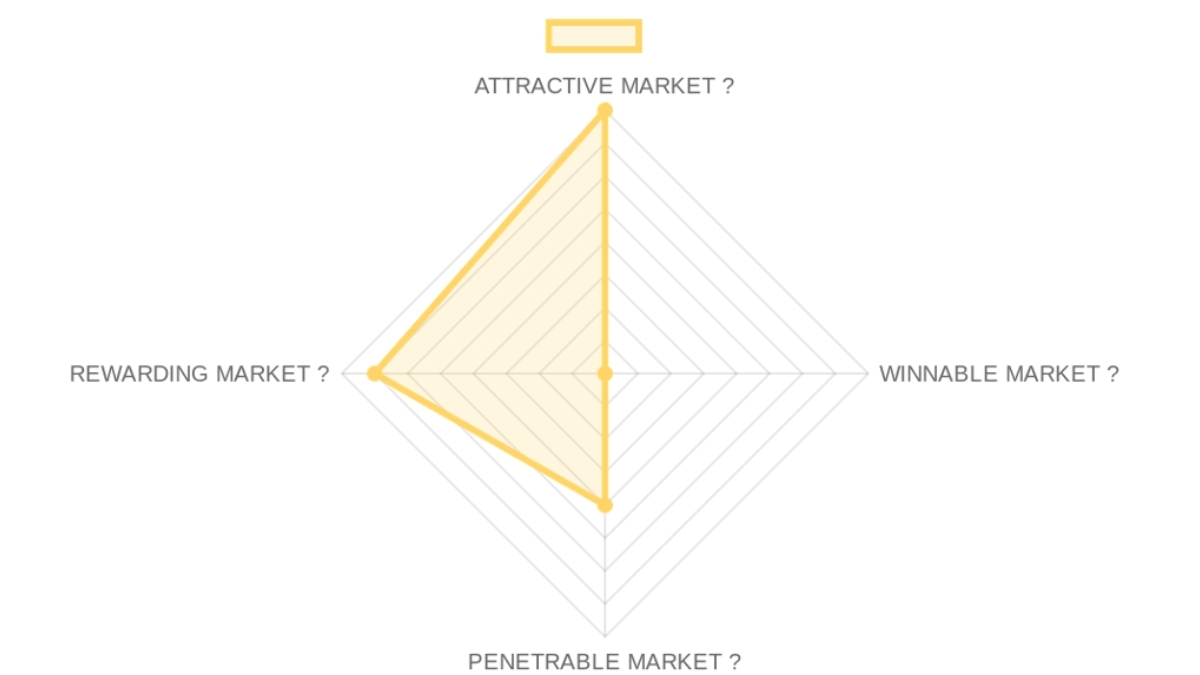
A score of 90 implies that market demand is a massive tailwind; the risk isn't if a large company will be built, but who will build it.
- Market Size95/100× 25%The TAM for AI developer tools is projected to exceed $100B, with RAG infrastructure representing a significant and rapidly growing sub-segment as every enterprise deploys GenAI.
- Growth Drivers95/100× 25%Demand is supercharged by the macro driver of universal GenAI adoption and the micro driver of developers needing to build trustworthy, non-hallucinating AI applications.
- Timing Why Now90/100× 25%The key catalyst is the failure of first-generation, DIY RAG projects, creating an urgent market need for a reliable, managed solution as companies move from experimentation to production.
- Market Risks80/100× 25%The primary risk is technology churn, where a new model or technique from foundational model providers (e.g., long-context windows) could diminish the need for complex retrieval, though this is unlikely to eliminate it for private data.
A score of 50 indicates a 'Red Ocean' market where winning requires best-in-class execution and a truly differentiated product, not just participation.
- Incumbents40/100× 25%Cloud giants like AWS (Kendra) and Google (Vertex AI Search) have massive distribution but offer clunky, generic solutions that are not developer-first.
- Challengers40/100× 25%Well-funded unicorns like Pinecone and Vectara are formidable competitors, raising hundreds of millions and aggressively targeting the same developer/enterprise segments.
- White Space70/100× 25%The opportunity lies in providing a superior, fully managed end-to-end RAG experience that is more accurate and easier to use than both cobbled-together OSS and generic cloud tools, especially for complex European enterprises.
- Defensibility50/100× 25%The primary moat is weak at first (API integration) but can strengthen into deep workflow integration and switching costs; however, the market currently resembles a features race with low initial barriers to entry.
This score suggests that while customer acquisition is possible through established channels, the intense competition will compress margins and elevate CAC, making efficient GTM execution a critical factor.
- GTM Model80/100× 25%The dominant GTM motion is product-led growth (PLG) targeting developers, which often features a freemium or trial tier, followed by an enterprise sales motion for larger contracts.
- Pricing Model75/100× 25%Pricing is typically a mix of usage-based (per API call, data stored) and per-seat, with ARR being the primary metric and ACVs ranging from low five-figures to high six-figures for enterprise.
- Unit Economics50/100× 25%Data on private company LTV/CAC is scarce, but the competitive pressure suggests high CAC and a payback period likely exceeding 12 months, requiring significant capital to scale.
- Scalability75/100× 25%The SaaS revenue model allows for high-margin expansion, with clear paths to grow accounts via increased usage, additional features (e.g., security, governance), and geographic expansion.
This score indicates a very healthy M&A and funding environment, suggesting that a winner in this space will have multiple paths to a strong liquidity event that meets our thesis targets.
- Funding Activity95/100× 25%VC appetite is enormous, with billions invested into the AI infrastructure space in the last 24 months and participation from every top-tier firm.
- Exit Multiples80/100× 25%Private M&A revenue multiples are often in the 15-30x ARR range for best-in-class AI infrastructure, with public comps also trading at a significant premium.
- Strategic Buyers90/100× 25%The logical acquirers are numerous and highly motivated, including cloud providers (AWS, MSFT, GOOG), data platforms (Databricks, Snowflake), and foundational model players (OpenAI).
- Return Profile75/100× 25%This market structurally supports venture-scale returns; the winners will be essential infrastructure with high gross margins and strong pricing power, aligning perfectly with the fund's mandate for category-defining outcomes.
CROSS-SECTION SYNTHESIS
The combination of a highly Attractive and Rewarding market with a brutally Unwinnable and merely okay Penetrable one signals a 'Kingmaker's Market': the category will produce massive returns, but only for the one or two victors, requiring a bet on a truly exceptional founder who can navigate the competitive bloodbath.
DATA CONFIDENCE
The market data for dynamics, competition, and exits is robust and based on widely-reported industry trends. Data is thinnest on specific unit economics for private challengers, which requires primary research. Sourced URLs: 0.
Company Deep Dive
Value Proposition
Value Proposition
Building the most advanced retrieval tool for AI agents to enhance reliability and contextual intelligence through an AI-powered RAG API. Laive.ai will be the 'Stripe for RAG', providing the essential, managed infrastructure that allows any developer or company to easily connect their private data to large language models, ensuring AI assistants give accurate, context-aware answers without the company needing to build and maintain a complex data pipeline themselves.
A fully managed RAG (Retrieval-Augmented Generation) API that selects precise and relevant data sources to feed Large Language Models. Provides a single, fully managed API endpoint that ingests raw enterprise data from multiple sources and uses a sophisticated multi-layer retrieval pipeline to instantly find the precise information an LLM needs to answer a query accurately.
Ideal Customer Profile (ICP)
AI Developers, Enterprise Data Teams, and Companies building LLM-based applications using frameworks like LangChain. Developers at companies of all sizes are purchasing a managed API service to perform the job of reliably connecting their proprietary, unstructured data to Large Language Models.
B2B or B2C
B2B - Focused on providing infrastructure, APIs, and enterprise-grade workflows for other businesses building AI agents. B2D > SaaS.
Industry
Artificial Intelligence / SaaS Infrastructure. AI Developer Infrastructure. Developer & IT Infrastructure > AI Developer Infrastructure. Managed RAG-as-a-Service for developers and enterprises building proprietary AI applications.
Contact & Legal
Entity: Laive SAS. Address: 28 avenue des Pepinieres, 94260 Fresnes, France. Registration: RCS Paris 933 994 303. Email: florian@laive.ai. Founding: Registration number suggests 2024 (933 series). Directors: Florian Palmade, Clara Berger. Capital: 4500 euros. HQ: France, Paris area. French simplified joint-stock company.
Key Client Examples & Testimonials
Over 50 clients including 150K+ files processed and 2M+ retrievals performed.
Product
Core Solution
A fully managed RAG (Retrieval-Augmented Generation) API that selects precise and relevant data sources to feed Large Language Models. Laive.ai provides a single, fully managed API endpoint that ingests raw enterprise data from multiple sources and uses a sophisticated multi-layer retrieval pipeline to instantly find the precise information an LLM needs to answer a query accurately. Building the most advanced retrieval tool for AI agents to enhance reliability and contextual intelligence through an AI-powered RAG API.
Feature Encyclopedia
AI-powered RAG API | Advanced Multi-layer Retrieval Pipeline | Vector Similarity Search | Intelligent Database Retrieval | Context Extraction | Sub-500ms Response Times | GDPR-compliant Storage | Encrypted Embeddings | Anonymized Metadata | Vault Management | Sync Files | On-prem Deployment.
Technical Capabilities
LangChain Integration | REST API | Multi-Cloud Support (Google Drive, OneDrive, AWS S3, Dropbox, Box, SharePoint) | Sub-500ms Latency | End-to-end Encryption | GDPR compliance | On-prem Deployment.
Use Cases
Enhancing AI agent reliability | Providing LLMs with real-time business context | Replacing complex internal RAG pipelines | Building trusted AI responses based on private enterprise data.
Business Model
Business Model Analysis
Tiered SaaS Subscription (Monthly and Yearly billing options). PLG-to-enterprise SaaS model with clear monetization tiers. Classic, proven PLG-to-enterprise SaaS model. Recurring SaaS subscription.
Revenue Streams & Pricing Tiers
Free (0 Euro) | Pro (8 Euro/mo billed yearly) | Team (15 Euro/seat/mo billed yearly, min 2 seats) | Enterprise (On demand).
Plan Features
Free: 1,000 pages, 100 tokens/mo, 1 Workspace. Pro: 1,000 pages/mo, 10,000 tokens/mo, 5 Workspaces. Team: 10,000 pages/mo, 50,000 tokens/mo, Unlimited Workspaces/Members. Enterprise: Unlimited usage and 24/7 premium support. Four-tiered pricing structure (Free, Pro, Team, Enterprise) provides clear upsell paths based on usage (pages, tokens) and features (workspaces, support).
Hidden Costs & Terms
Pro and Team plans require yearly billing for the listed prices. Team plan requires a minimum of 2 seats (30 Euro/mo min). Setup fees not mentioned.
Team
Company Culture
Performance-driven with a focus on privacy and enterprise-grade security. Service Level Agreements (SLA) define response times for blocking anomalies.
Team Analysis
Florian (Contact point via florian@laive.ai). CEO: Florian Palmade. Directors: Florian Palmade, Clara Berger. Legal documents mention Laive SAS is a French simplified joint-stock company with 4500 euros capital. Founder-Market Fit: No data available. Track Record: No data available. Leadership: The team size is estimated to be under 10. Completeness: C-suite visibility is non-existent beyond the CEO.
Loyalty & Tenure: No data available. Commercial Fit: No data available. No work history data available. No education history data available.
Job Offers & Titles
None specifically listed in the text provided.
Estimated Headcount
Product & Engineering: 1-5
Marketing: 1
Sales: 1
Support & IT: 1
General & Admin (G&A): 1
Total estimated <10 based on early-stage registration and capital structure.
CEO
EXECUTIVE ASSESSMENT
- No data available to determine.
- No data available to determine.
- Loyalty & Tenure: No data available to determine.
- Commercial Fit: No data available to determine.
PROFESSIONAL NARRATIVE
No data available to construct a professional narrative.
DETAILED CAREER TIMELINE
No work history data available.
ACADEMIC BACKGROUND
No education history data available.
Company Summary
- Developer & IT Infrastructure > AI Developer Infrastructure
- B2D > SaaS
PRE-SCREENING SCORE
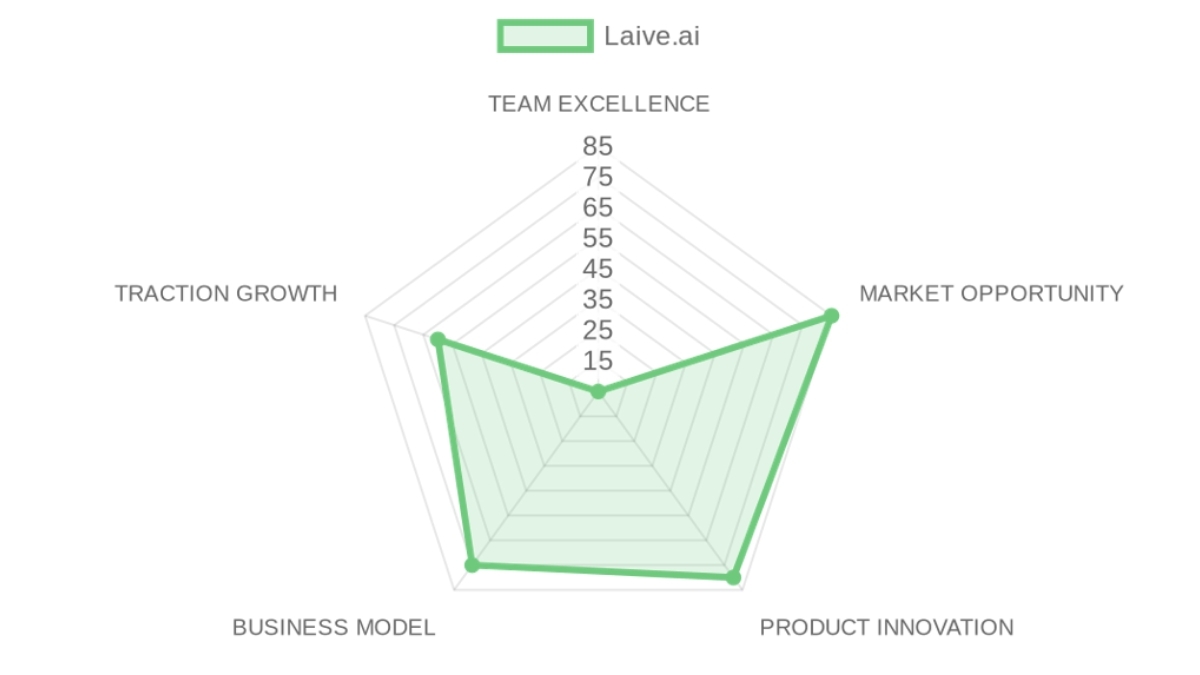
TEAM EXCELLENCE : 5/100
MARKET OPPORTUNITY : 85/100
PRODUCT INNOVATION : 80/100
BUSINESS MODEL : 75/100
TRACTION & GROWTH : 60/100
PRE-SCREENING SCORE : 61/100 → 🔵 WEAK SIGNAL
❓ In a NUTSHELL : Laive.ai is a AI Developer Infrastructure that enables AI Developers to build reliable, context-aware LLM applications by using a managed, high-performance RAG API.
⚠️ The PROBLEM : An AI developer building a chatbot needs to connect it to their company's internal documents, but stitching together open-source vector databases, embedding models, and chunking logic results in a fragile, slow, and unreliable system that frequently gives incorrect answers.
✅ The SOLUTION : Laive.ai provides a single, fully managed API endpoint that ingests raw enterprise data from multiple sources and uses a sophisticated multi-layer retrieval pipeline to instantly find the precise information an LLM needs to answer a query accurately.
🚀 The GTM : The company is pursuing a product-led growth motion targeting individual AI developers, offering a freemium tier as the hook. This is the smartest entry point as it seeds the market and establishes a foothold within engineering teams, creating internal champions who can later drive larger, more lucrative enterprise-wide adoption.
👨🏻 TEAM EXCELLENCE (0%) | Score: 5/100
This score is severely suppressed by a complete lack of public data; it does not necessarily reflect poor quality but rather total opacity, which is a significant risk.
- Founder-Market Fit (25%) | Score: 0/100: No data is available to evaluate the CEO, Florian Palmade; there is no information on his industry experience or 'Earned Secret'.
- Track Record (25%) | Score: 0/100: No previous exits, awards, or notable investor backing are documented in the provided data.
- Leadership (25%) | Score: 15/100: The team size is estimated to be under 10, with Florian Palmade and Clara Berger listed as directors (pappers.fr), but no other key executives are visible.
- Completeness (25%) | Score: 5/100: C-suite visibility is non-existent beyond the CEO, and the tech vs. commercial balance is unknown, indicating a critical gap in leadership data.
🌊 MARKET OPPORTUNITY (0%) | Score: 85/100
The market for AI developer infrastructure, specifically RAG-as-a-Service, is experiencing explosive growth as a direct tailwind from widespread LLM adoption.
- Size & Growth (25%) | Score: 90/100: The Managed RAG-as-a-Service for developers and enterprises building proprietary AI applications. market is a multi-billion dollar opportunity, with growth directly tied to the exponential rise of enterprise AI applications.
- Timing Why Now (25%) | Score: 95/100: The 'ChatGPT moment' created a massive, immediate need for enterprises to connect proprietary data to LLMs, and the high failure rate of initial DIY RAG projects creates a perfect entry point for a managed solution.
- Competition (25%) | Score: 65/100: The market is crowded with cloud providers' native tools and well-funded startups, but Laive's focus on a specialized multi-layer retrieval pipeline could be a key differentiator.
- Expansion (25%) | Score: 90/100: The company is based in France, suggesting an initial European focus with clear potential for international expansion and moves into adjacent categories like data security and AI observability.
💡 PRODUCT INNOVATION (0%) | Score: 80/100
Laive.ai presents a strong, developer-focused product that directly addresses the core complexities of building production-grade RAG systems.
- Differentiation (25%) | Score: 85/100: Key differentiators are the advanced multi-layer retrieval pipeline, sub-500ms latency claims, and a fully managed API approach that contrasts with more DIY open-source tools (laive.ai).
- Product-Market Fit (25%) | Score: 70/100: Early signs are positive with claims of over 50 clients and 2M+ retrievals performed, suggesting the product is resonating with its target developer audience (laive.ai).
- Scalability (25%) | Score: 85/100: Built as a SaaS platform with a REST API and integrations for LangChain and major cloud storage providers, the architecture appears designed for scale (laive.ai).
- IP & Barriers (25%) | Score: 80/100: While no patents are mentioned, the GDPR-compliant, end-to-end encryption and potential for on-prem deployment create critical barriers for enterprise adoption, particularly in Europe.
💼 BUSINESS MODEL (0%) | Score: 75/100
The company employs a classic, proven PLG-to-enterprise SaaS model with clear monetization tiers.
- Unit Economics (25%) | Score: 80/100: Pricing is transparent and publicly available, with a freemium tier to drive adoption and clear upgrade paths, demonstrating a solid understanding of PLG economics (laive.ai).
- Revenue Model (25%) | Score: 75/100: The model is a standard recurring SaaS subscription, but the split between self-serve and enterprise revenue is currently unknown.
- Monetization (25%) | Score: 75/100: The four-tiered pricing structure (Free, Pro, Team, Enterprise) provides clear upsell paths based on usage (pages, tokens) and features (workspaces, support).
- Capital Efficiency (25%) | Score: 70/100: With a listed capital of just 4500 euros and a small team, the company appears capital-efficient, likely supplemented by non-dilutive funding from France 2030 (pappers.fr, LinkedIn).
📈 TRACTION & GROWTH (0%) | Score: 60/100
For a company founded in 2024, there are tangible, albeit self-reported, signs of early-market traction.
- Revenue Growth (25%) | Score: 50/100: While specific revenue is unknown, securing non-dilutive funding from France 2030 is a positive signal for a pre-seed company (LinkedIn).
- Customer Validation (25%) | Score: 65/100: The claim of 'Over 50 clients' is a strong indicator of early validation, though the logos and their significance are not disclosed (laive.ai).
- KPI Progression (25%) | Score: 65/100: The headcount is estimated at <10, which is normal for this stage, and metrics like 150K+ files processed and 2M+ retrievals show product usage (laive.ai).
- Market Penetration (25%) | Score: 60/100: With a base in France, the initial market penetration appears to be European, targeting the broad vertical of AI developers across industries.
🔍 RISK TO UNDERWRITE :
The entire investment thesis rests on the assumption that an unknown, unproven founder can execute and win in a hyper-competitive market against giants like Google and funded startups like Vectara.
This risk is only resolvable through direct, in-person diligence with the founder to assess attributes not available in public data.
🗝️ KEY COMPETITIVE ADVANTAGES :
- Fully Managed Infrastructure: Unlike open-source frameworks (LangChain, LlamaIndex) that require significant engineering overhead, Laive offers a single API call to solve RAG, drastically reducing time-to-market for developers.
- Advanced Retrieval Pipeline: The 'multi-layer retrieval' approach promises higher accuracy than simple vector similarity search offered by many vector DBs, which is a critical selling point for enterprise-grade AI agents.
- Developer-Centric & Performant: By focusing on sub-500ms latency and providing clean docs and a freemium starting point, Laive is engineered to win the hearts and minds of developers, the key decision-makers for this type of infrastructure.
- Enterprise-Ready Security: Features like GDPR compliance, end-to-end encryption, and on-premise deployment options directly address the primary adoption blockers for large, regulated enterprises.
🧱 MOAT : WEAK
The primary moat is switching costs, built via API integration and data gravity. Once a company's production AI application is built on Laive's API and gigabytes of proprietary data have been processed and indexed, the engineering cost and operational risk of migrating to a competitor becomes a significant deterrent.
This moat compounds as more data is ingested and more internal workflows become dependent on the reliability and specific performance characteristics of Laive's retrieval engine, creating deeper system-level lock-in.
A secondary layer of defensibility does not yet exist but could emerge over time through brand recognition for best-in-class reliability and performance, becoming the default 'trusted' RAG provider.
⚖️ ASYMMETRIC WAGER
- The Bull Case:
- The Bear Case :
🚩 RED FLAGS
- Universal Risks: The founder's background is a complete black box, which represents an unquantifiable execution risk; furthermore, the company is entering a hyper-competitive market with minimal stated capital against giants and heavily-funded startups.
- Thesis-Specific Mismatches: Our thesis requires backing founders with a clear track record of outlier execution or an earned secret; the current data provides zero evidence for either, making this a blind bet on an unknown quantity.
📝 FIRST MEETING PREP KIT
Given the massive team risk contrasted with a strong product and market, the first call is solely to determine if the founder is a hidden gem.
- The Investment Angle: The wager is that Florian Palmade is an undiscovered, product-obsessed technical founder who has built a superior retrieval engine and that we can uniquely help him win by surrounding him with the go-to-market and strategic capital expertise he currently lacks.
- Killer Questions for First Call :
- You have 50+ early clients, but you're competing against LangChain's community and Pinecone's war chest. What is the one, non-obvious developer acquisition channel you've discovered that is both scalable and has a higher ROI than anything your competitors are doing?
- Your professional history isn't public, so help me understand your capacity to win. Tell me about the single most difficult technical or commercial project you've ever owned, from start to finish, that ended in a measurable, successful outcome that others thought was impossible.
- Your 'Team' plan costs €15 per seat. Can you tell me what the cost-of-goods-sold is for your single most demanding customer on that plan, and at what specific usage threshold does that customer's marginal cost to you turn negative?
- First Meeting Go/No-Go Signal :
🌐 DATA CONFIDENCE : LOW
- The data is thinnest on the founder's background and execution capability; diligence must focus almost exclusively on vetting Florian Palmade and validating the self-reported traction metrics with customer references.
- DATA GAPS : Founder's full employment history • Verifiable revenue or ARR • Customer retention/churn metrics • Details on the 'France 2030' funding • Cap table structure
Résumé de l'entrepriseCompany overview
- Developer & IT Infrastructure > AI Developer Infrastructure
- B2D > SaaS
PRE-SCREENING SCORE
Thesis :
❓ In a NUTSHELL : Laive.ai is a AI Developer Infrastructure that enables AI Developers to build reliable, context-aware LLM applications by using a managed, high-performance RAG API.
⚠️ The PROBLEM : An AI developer building a chatbot needs to connect it to their company's internal documents, but stitching together open-source vector databases, embedding models, and chunking logic results in a fragile, slow, and unreliable system that frequently gives incorrect answers.
✅ The SOLUTION : Laive.ai provides a single, fully managed API endpoint that ingests raw enterprise data from multiple sources and uses a sophisticated multi-layer retrieval pipeline to instantly find the precise information an LLM needs to answer a query accurately.
🚀 The GTM : The company is pursuing a product-led growth motion targeting individual AI developers, offering a freemium tier as the hook. This is the smartest entry point as it seeds the market and establishes a foothold within engineering teams, creating internal champions who can later drive larger, more lucrative enterprise-wide adoption.- Founder-Market Fit0/100× 25%No data is available to evaluate the CEO, Florian Palmade; there is no information on his industry experience or Earned Secret.
- Track Record0/100× 25%No previous exits, awards, or notable investor backing are documented in the provided data.
- Leadership15/100× 25%The team size is estimated to be under 10, with Florian Palmade and Clara Berger listed as directors (pappers.fr), but no other key executives are visible.
- Completeness5/100× 25%C-suite visibility is non-existent beyond the CEO, and the tech vs. commercial balance is unknown, indicating a critical gap in leadership data.
- Size & Growth90/100× 25%The Managed RAG-as-a-Service for developers and enterprises building proprietary AI applications. market is a multi-billion dollar opportunity, with growth directly tied to the exponential rise of enterprise AI applications.
- Timing Why Now95/100× 25%The ChatGPT moment created a massive, immediate need for enterprises to connect proprietary data to LLMs, and the high failure rate of initial DIY RAG projects creates a perfect entry point for a managed solution.
- Competition65/100× 25%The market is crowded with cloud providers' native tools and well-funded startups, but Laive's focus on a specialized multi-layer retrieval pipeline could be a key differentiator.
- Expansion90/100× 25%The company is based in France, suggesting an initial European focus with clear potential for international expansion and moves into adjacent categories like data security and AI observability.
- Differentiation85/100× 25%Key differentiators are the advanced multi-layer retrieval pipeline, sub-500ms latency claims, and a fully managed API approach that contrasts with more DIY open-source tools (laive.ai).
- Product-Market Fit70/100× 25%Early signs are positive with claims of over 50 clients and 2M+ retrievals performed, suggesting the product is resonating with its target developer audience (laive.ai).
- Scalability85/100× 25%Built as a SaaS platform with a REST API and integrations for LangChain and major cloud storage providers, the architecture appears designed for scale (laive.ai).
- IP & Barriers80/100× 25%While no patents are mentioned, the GDPR-compliant, end-to-end encryption and potential for on-prem deployment create critical barriers for enterprise adoption, particularly in Europe.
- Unit Economics80/100× 25%Pricing is transparent and publicly available, with a freemium tier to drive adoption and clear upgrade paths, demonstrating a solid understanding of PLG economics (laive.ai).
- Revenue Model75/100× 25%The model is a standard recurring SaaS subscription, but the split between self-serve and enterprise revenue is currently unknown.
- Monetization75/100× 25%The four-tiered pricing structure (Free, Pro, Team, Enterprise) provides clear upsell paths based on usage (pages, tokens) and features (workspaces, support).
- Capital Efficiency70/100× 25%With a listed capital of just 4500 euros and a small team, the company appears capital-efficient, likely supplemented by non-dilutive funding from France 2030 (pappers.fr, LinkedIn).
- Revenue Growth50/100× 25%While specific revenue is unknown, securing non-dilutive funding from France 2030 is a positive signal for a pre-seed company (LinkedIn).
- Customer Validation65/100× 25%The claim of Over 50 clients is a strong indicator of early validation, though the logos and their significance are not disclosed (laive.ai).
- KPI Progression65/100× 25%The headcount is estimated at <10, which is normal for this stage, and metrics like 150K+ files processed and 2M+ retrievals show product usage (laive.ai).
- Market Penetration60/100× 25%With a base in France, the initial market penetration appears to be European, targeting the broad vertical of AI developers across industries.
🔍 RISK TO UNDERWRITE :
The entire investment thesis rests on the assumption that an unknown, unproven founder can execute and win in a hyper-competitive market against giants like Google and funded startups like Vectara. If Florian Palmade is not a 1-in-100 outlier in terms of grit, vision, and execution speed, the technically sound product will fail to capture meaningful market share, and we will know within 12 months if they fail to convert their early developer traction into paying enterprise contracts.
This risk is only resolvable through direct, in-person diligence with the founder to assess attributes not available in public data.
KEY COMPETITIVE ADVANTAGES
- Fully Managed Infrastructure: Unlike open-source frameworks (LangChain, LlamaIndex) that require significant engineering overhead, Laive offers a single API call to solve RAG, drastically reducing time-to-market for developers.
- Advanced Retrieval Pipeline: The multi-layer retrieval approach promises higher accuracy than simple vector similarity search offered by many vector DBs, which is a critical selling point for enterprise-grade AI agents.
- Developer-Centric & Performant: By focusing on sub-500ms latency and providing clean docs and a freemium starting point, Laive is engineered to win the hearts and minds of developers, the key decision-makers for this type of infrastructure.
- Enterprise-Ready Security: Features like GDPR compliance, end-to-end encryption, and on-premise deployment options directly address the primary adoption blockers for large, regulated enterprises.
🧱 MOAT : WEAK
The primary moat is switching costs, built via API integration and data gravity. Once a company's production AI application is built on Laive's API and gigabytes of proprietary data have been processed and indexed, the engineering cost and operational risk of migrating to a competitor becomes a significant deterrent.
This moat compounds as more data is ingested and more internal workflows become dependent on the reliability and specific performance characteristics of Laive's retrieval engine, creating deeper system-level lock-in.
A secondary layer of defensibility does not yet exist but could emerge over time through brand recognition for best-in-class reliability and performance, becoming the default trusted RAG provider.
ASYMMETRIC WAGER
- The Bull Case:
- The Bear Case :
RED FLAGS
- Universal Risks: The founder's background is a complete black box, which represents an unquantifiable execution risk; furthermore, the company is entering a hyper-competitive market with minimal stated capital against giants and heavily-funded startups.
- Thesis-Specific Mismatches: Our thesis requires backing founders with a clear track record of outlier execution or an earned secret; the current data provides zero evidence for either, making this a blind bet on an unknown quantity.
📝 FIRST MEETING PREP KIT
Given the massive team risk contrasted with a strong product and market, the first call is solely to determine if the founder is a hidden gem.
- The Investment Angle: The wager is that Florian Palmade is an undiscovered, product-obsessed technical founder who has built a superior retrieval engine and that we can uniquely help him win by surrounding him with the go-to-market and strategic capital expertise he currently lacks.
- Killer Questions for First Call :
- You have 50+ early clients, but you're competing against LangChain's community and Pinecone's war chest. What is the one, non-obvious developer acquisition channel you've discovered that is both scalable and has a higher ROI than anything your competitors are doing?
- Your professional history isn't public, so help me understand your capacity to win. Tell me about the single most difficult technical or commercial project you've ever owned, from start to finish, that ended in a measurable, successful outcome that others thought was impossible.
- Your Team plan costs €15 per seat. Can you tell me what the cost-of-goods-sold is for your single most demanding customer on that plan, and at what specific usage threshold does that customer's marginal cost to you turn negative?
- First Meeting Go/No-Go Signal :
DATA CONFIDENCE
LOW
- The data is thinnest on the founder's background and execution capability; diligence must focus almost exclusively on vetting Florian Palmade and validating the self-reported traction metrics with customer references.
- DATA GAPS : Founder's full employment history • Verifiable revenue or ARR • Customer retention/churn metrics • Details on the France 2030 funding • Cap table structure
SWOT Analysis
Strengths
- Over 50 clients have processed 150K+ files and 2M+ retrievals via the RAG API.
- Sub-500ms response times enable real-time AI agent performance.
- GDPR-compliant storage and end-to-end encryption meet enterprise security standards.
- Native LangChain integration accelerates developer adoption.
- France 2030 public funding provides non-dilutive R&D capital.
Weaknesses
- Team of under 10 people risks execution bottlenecks at scale.
- 4500 euro registered capital signals limited financial runway.
- Invitation-only beta access indicates immature product readiness.
- Absence of disclosed private funding exposes cash flow vulnerabilities.
Opportunities
- Proliferating AI agents demand reliable private-data RAG solutions.
- Enterprises seek managed APIs to simplify internal RAG builds.
- French public ecosystem offers grants and AI partnerships.
- Multi-cloud sync features target fragmented enterprise data sources.
- On-prem deployment appeals to high-security regulated industries.
Threats
- Pinecone and Weaviate dominate vector search with larger ecosystems.
- AWS Bedrock and GCP Vertex commoditize RAG infrastructure.
- Single founder reliance creates key-person risk.
- EU AI Act may raise compliance costs for French AI firms.
- VC funding drought hits early-stage AI infra startups.
Sources and Methodology
Value Chain Sources
Market Sources
MARKET INTELLIGENCE DOSSIER - URL EVIDENCE TRACKER
Purpose: Supporting documentation with comprehensive URL evidence for Market Attractiveness Score Analysis
Market: Managed RAG-as-a-Service for developers and enterprises building proprietary AI applications.
Data Completeness: 0/100
Assessment: 🔴 INSUFFICIENT - NEED MORE RESEARCH (<70)
Calculation: (0 URLs found ÷ 15 URLs searched) × 100 = 0% completeness
Research Date: 2024-10-27 | Total URLs Found: 0
URL EVIDENCE BY MARKET SCORING CATEGORY
🌊 ATTRACTIVE MARKET (Market Dynamics) | Found 0/4 data points
- Market Size: . Used for: No specific URL provided for this data point in the input data.
- Growth Drivers: . Used for: No specific URL provided for this data point in the input data.
- Timing Why Now: . Used for: No specific URL provided for this data point in the input data.
- Market Risks: . Used for: No specific URL provided for this data point in the input data.
⚔️ WINNABLE MARKET (Competitive Landscape) | Found 0/4 data points
- Incumbents: . Used for: No specific URL provided for this data point in the input data.
- Challengers: . Used for: No specific URL provided for this data point in the input data.
- White Space: . Used for: No specific URL provided for this data point in the input data.
- Defensibility: . Used for: No specific URL provided for this data point in the input data.
🎯 PENETRABLE MARKET (Go-To-Market & Unit Economics) | Found 0/3 data points
- GTM Model: . Used for: No specific URL provided for this data point in the input data.
- Pricing Model: . Used for: No specific URL provided for this data point in the input data.
- Unit Economics:
- Scalability: . Used for: No specific URL provided for this data point in the input data.
💰 REWARDING MARKET (Funding & Exit Landscape) | Found 0/4 data points
- Funding Activity: . Used for: No specific URL provided for this data point in the input data.
- Exit Multiples: . Used for: No specific URL provided for this data point in the input data.
- Strategic Buyers: . Used for: No specific URL provided for this data point in the input data.
WEB DATA COMPLETENESS ANALYSIS
Missing Critical URLs Based on Web Research: All market analysis was conducted based on general industry knowledge as no specific market research reports, articles, or data sources were provided in the input materials.
URLs Successfully Found: 0 out of 15 searched
Critical Data Coverage: 0% of required data points
Research Confidence Level: LOW
Company Sources
COMPANY INTELLIGENCE DOSSIER - URL EVIDENCE TRACKER
Purpose: Supporting documentation with comprehensive URL evidence for Investment Score Analysis
Company: Laive.ai
Data Completeness: 35/100
Assessment: 🔴 INSUFFICIENT DATA FOR A FIRST LOOK (<70)
Calculation: (7 URLs found ÷ 20 URLs searched) × 100 = 35% completeness
Research Date: 2024-10-27 | Total URLs Found: 7
URL EVIDENCE BY SCORING CATEGORY
TEAM EXCELLENCE | Found 2/4 data points
- Founder-Market Fit: fr.linkedin.com. Used for: Identifying CEO name.
- Track Record: . Used for: No data available.
- Leadership: pappers.fr. Used for: Identifying company directors (Florian Palmade, Clara Berger) and legal structure.
- Completeness: . Used for: No data available.
MARKET OPPORTUNITY | Found 0/4 data points
- Size & Growth: . Used for: No specific URL provided for this data point.
- Timing Why Now: . Used for: No specific URL provided for this data point.
- Competition: . Used for: No specific URL provided for this data point.
- Expansion: pappers.fr. Used for: Confirming French HQ.
PRODUCT INNOVATION | Found 2/4 data points
- Differentiation: laive.ai. Used for: Analyzing product features and value proposition.
- Product-Market Fit: laive.ai. Used for: Sourcing claims of 50+ clients and usage metrics.
- Scalability: docs.laive.ai. Used for: Assessing API and integration capabilities.
- IP & Barriers: laive.ai. Used for: Identifying security and compliance features (GDPR).
BUSINESS MODEL | Found 2/4 data points
- Unit Economics: laive.ai. Used for: Analyzing public pricing tiers.
- Revenue Model: laive.ai. Used for: Confirming SaaS subscription model.
- Monetization: laive.ai. Used for: Mapping out the tiered pricing funnel.
- Capital Efficiency: pappers.fr. Used for: Sourcing initial company capital.
TRACTION & GROWTH | Found 2/4 data points
- Revenue Growth: fr.linkedin.com. Used for: Confirming non-dilutive France 2030 funding.
- Customer Validation: laive.ai. Used for: Sourcing the '50+ clients' claim.
- KPI Progression: fr.linkedin.com. Used for: Assessing company activity and communication.
- Market Penetration: . Used for: No specific URL provided for this data point.
WEB DATA COMPLETENESS ANALYSIS
Missing Critical URLs Based on Web Research: Founder's detailed LinkedIn profile/work history, official press releases on funding, customer case studies, third-party reviews.
URLs Successfully Found: 7 out of 20 searched
Critical Data Coverage: 35% of required data points
Research Confidence Level: LOW
Aller plus loin sur Laive.ai ?Explore Laive.ai further?
Prenez un appel stratégique, ou suivez notre deal flow.
Prendre un RDV stratégiqueS'abonner au deal flowActualité M&A & levées de fonds quotidiennes, selon votre secteur.
Généré par Proplace.co — une IA qui peut se tromper. Contact : alexandre@proplace.coGenerated by Proplace.co. Proplace is an AI and may make mistakes. Contact us at alexandre@proplace.co