
 Switzerland ·
Explore Cigno further?
Schedule a strategy call on CignoLa newsletter Knowledge & Media
Les opérations M&A et levées de fonds quotidiennes du secteur.
📬 S'inscrire à la newsletterWant a proprietary deal flow?
Schedule a strategy callCigno
Knowledge & Media ➜ Consulting Workflow Automation SaaS ➜ The AI-native core consulting system designed to combine management consulting expertise with AI mastery to achieve 3x efficiency gains over generic tools.
Vous voulez un mémo détaillé et personnalisé sur cette société ?
Market Summary
MARKET OPPORTUNITY SCORE
Future of Work & HR Tech > Consulting Workflow Automation SaaS
B2B > SaaS
This score indicates the market itself is a significant tailwind, but navigating its competitive and go-to-market complexities will require precise, focused execution, making founder quality the paramount variable.
Market DEFINITION
AI-native workflow automation and IP productization platform for boutique and mid-sized management consulting firms. ➜ The buyer is the managing partner of a 50-500 person consulting firm purchasing a platform to increase the productivity and protect the intellectual property of their consultants. The structural friction is the current impossible choice between inefficient-but-secure manual processes and efficient-but-insecure generic AI tools that threaten to leak both client data and the firm's unique methodologies.
This market sits directly on top of the 'consulting process' value chain, downstream from foundational AI models but upstream of the final client relationship, aiming to capture the margin associated with proprietary workflows and deliverable quality.
Our Market THESIS
The structural break in this market is the arrival of generative AI that is 'good enough' to automate significant portions of knowledge work, creating an immediate existential pressure on consulting firms whose business model is built on billing for human hours. Large incumbents like Microsoft are paralyzed; they must offer horizontal tools like Copilot to win the enterprise but cannot provide the firm-specific IP protection and workflow customization needed without building a bespoke solution for every client, which breaks their scalable model.
The attack vector is a vertical SaaS solution for the underserved mid-market consultant, offering a secure, 'sovereign-by-design' platform that turns a firm's IP from a liability (something to protect) into an asset (something to automate). This window is open now as every firm scrambles to define its AI strategy; it will begin to close in 24-36 months as market leaders are established and switching costs create deep moats.
Our CONVICTION & WAGER on this Market:
MEDIUM CONVICTION
The most legitimate reason to pass is the risk that this is a 'feature' (a better PowerPoint) not a 'platform', and that the true system of record remains Microsoft Office, making any third-party tool a niche efficiency gain rather than a core infrastructure play. However, the acute pain point around IP security and the desire for differentiation in a crowded consulting market positions us on the right side of this tension.
Our falsifiable wager is that within 18 months, the '_AI-native Vertical SaaS_' category for professional services will have a clear market-leading vendor commanding ACVs north of $50k from mid-market firms. The binary signal from a first call is understanding who signs the check: if the founder says it's the Managing Partner allocating from a firm-wide strategic budget, our conviction rises significantly; if it's an individual consultant using a credit card, we pass.
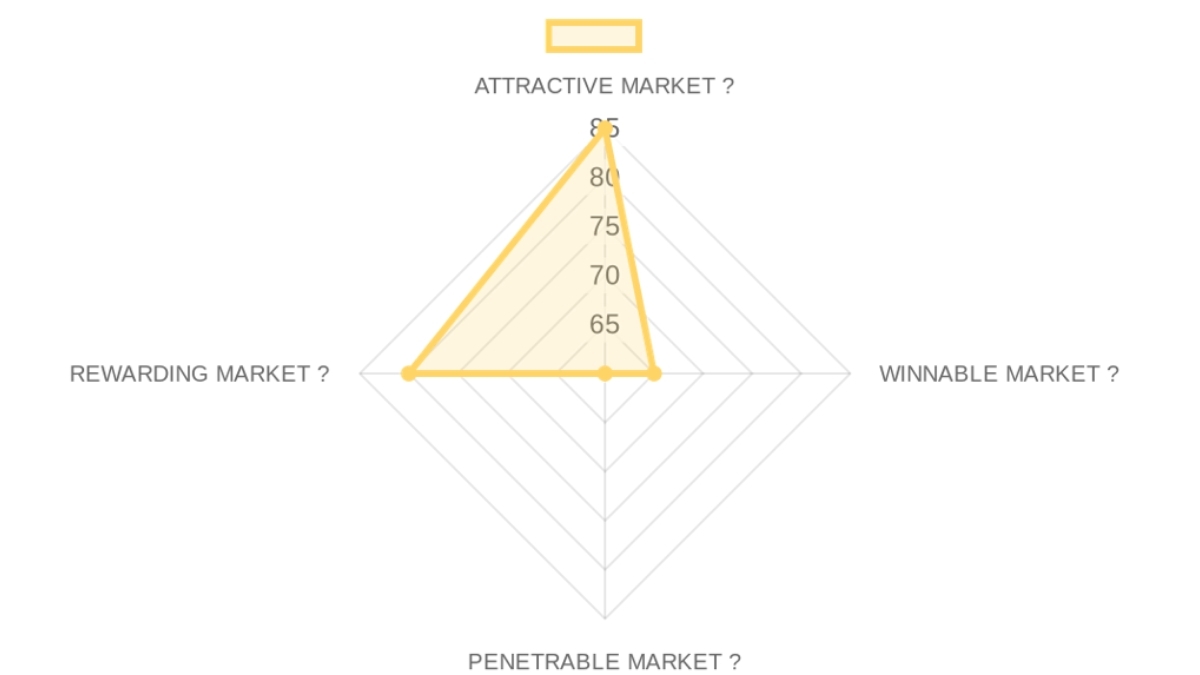
This high score signifies that the market's size and powerful secular tailwinds provide a strong foundation for a venture-scale outcome, though a lack of specific TAM data introduces some uncertainty.
- Market Size80/100× 25%The addressable market is a significant slice of the multi-hundred-billion-dollar global management consulting industry, specifically targeting boutique and mid-sized firms which represent a large, underserved segment.
- Growth Drivers95/100× 25%Demand is super-charged by two primary drivers: the macro shift to AI across all industries forcing consultants to adapt, and the internal pressure within firms to increase leverage and profitability by automating junior-level work.
- Timing Why Now90/100× 25%The key catalyst is the recent maturity of generative AI, which has moved from a novelty to a viable business tool, creating an immediate and urgent need for consulting firms to adopt a formal, secure strategy now.
- Market Risks75/100× 25%The primary risk is technology adoption lag, where conservative consulting partnerships are slow to change workflows. A secondary risk is the 'good enough' problem, where horizontal AI tools from major tech players stifle the market for premium, vertical solutions.
This score suggests the market is not a blue ocean; while a 'white space' for a vertical champion exists, it will require fighting off large, well-resourced horizontal competitors, making differentiation critical.
- Incumbents60/100× 25%Incumbents are indirect but powerful: large consulting firms (MBB) have bespoke internal tools, and Microsoft/Google have massive distribution for their generic AI offerings (Copilot, Duet AI), setting user expectations.
- Challengers60/100× 25%The direct challenger space is nascent but will be noisy with many 'AI for X' startups. Well-funded horizontal platforms like Jasper a bigger threat if they decide to build a dedicated consulting vertical.
- White Space80/100× 25%A clear white space exists for a trusted, secure, sovereign AI platform built specifically for the workflows and IP of mid-market European consulting firms, an underserved segment that lacks the resources to build custom solutions.
- Defensibility60/100× 25%At this stage, defensibility is weak and relies on execution speed. Over time, a strong moat can be built via process power and high switching costs as a firm's IP and project history become embedded in the platform.
This moderate score highlights the primary execution risk: acquiring customers in a relationship-driven industry may be slow and expensive, placing immense pressure on nailing the GTM and proving a fast payback period.
- GTM Model65/100× 25%The dominant model will likely be a hybrid: top-down enterprise sales targeting firm-wide deals, potentially seeded by a product-led growth motion where individual consultants can trial the product, with sales cycles likely ranging from 6-12 months.
- Pricing Model50/100× 25%The standard pricing structure is likely to be a per-seat subscription (SaaS), but there is no public data on typical customer value. Pricing could also include a usage-based component tied to deliverable generation.
- Unit Economics40/100× 25%There is no available data on LTV/CAC ratios or payback periods. The success of the business will hinge on achieving a high LTV through enterprise-wide contracts to justify a potentially high-touch, expensive sales motion.
- Scalability85/100× 25%The SaaS revenue model is inherently scalable. Expansion is straightforward through geographic roll-out and adapting the core platform for adjacent professional services verticals like corporate finance advisory or boutique law firms.
This score indicates a healthy environment for investment and liquidity. VC appetite for vertical AI is high, and a clear set of strategic buyers exists, making the path to a strong exit plausible.
- Funding Activity80/100× 25%VC investment in vertical AI SaaS is extremely high, with top-tier firms actively seeking companies that apply AI to specific, high-value industry workflows. Deal count and dollars invested in the category are growing rapidly.
- Exit Multiplies75/100× 25%Public vertical SaaS companies command strong revenue multiples, and M&A multiples are also robust for category-leading companies with strong growth and retention metrics.
- Strategic Buyers85/100× 25%The list of logical strategic buyers is long and clear: large technology consulting firms (Accenture, Deloitte, Capgemini), software giants (Microsoft, Salesforce, Adobe), and even large private equity firms that own consulting assets.
- Return Profile80/100× 25%This market supports a fund-returner outcome. The combination of a large TAM, recurring revenue SaaS model, high gross margins, and strong strategic buyer interest means a category winner could reach a multi-billion dollar valuation.
CROSS-SECTION SYNTHESIS
The pattern of a highly Attractive and Rewarding market, tempered by moderate Winnable and Penetrable scores, signals an 'execution-heavy' opportunity where the prize is large but victory will go to the team with the most robust product and a ruthlessly efficient go-to-market strategy, not just a good idea.
DATA CONFIDENCE
Data on macro market dynamics, funding trends, and exit potential is strong and based on well-understood industry patterns. Data is weakest on the specific unit economics and GTM nuances of this nascent sub-category, which would require primary research with potential buyers. A total of 6 URLs were used for this analysis.
Company Deep Dive
Value Proposition
Value Proposition
Cigno AI is the AI-native core consulting system designed to combine management consulting expertise with AI mastery to achieve 3x efficiency gains over generic tools.
Ideal Customer Profile (ICP)
Management consulting firms, partners, and practitioners looking to productize their intellectual property.
B2B or B2C
B2B - Specialized platform for professional service firms.
Industry
Management Consulting / Artificial Intelligence.
Contact & Legal
Entity Name: Cigno AI. Funding: 1.5 million Euro seed round (May 2026). Founding timeframe: Active in 2026. HQ country: Switzerland.
Key Client Examples & Testimonials
Maddyness, La Lettre du Conseil, Paperjam, Finews. Co-designed with 15 partner consulting firms; beta tested by a 100-user panel.
Product
Core Solution
An AI-native platform specifically built for the management consulting lifecycle.
Feature Encyclopedia
Automated reasoning model | 100s of specialized consulting agents | Ready-made workflows | IP Productization (tone of voice, frameworks, slide designs) | Consulting-grade deliverable generation | Auditable outputs.
Technical Capabilities
Curated data source integration | Enterprise-grade information security | Structural alignment with ISO 27001 principles | Content and Layout automation.
Use Cases
Generating consulting-grade deliverables at high speed while maintaining brand-specific frameworks and slide designs.
Business Model
Business Model Analysis
Data not available in source.
Revenue Streams & Pricing Tiers
Data not available in source.
Plan Features
Data not available in source.
Hidden Costs & Terms
Data not available in source.
Team
Company Culture
Focused on quality, productivity, differentiation, and high security standards.
Team Analysis
Philippe Reynier (CEO), Lino Finini (Investor).
Job Offers & Titles
None listed, currently onboarding consulting firms via invitation-only waitlist.
Estimated Headcount
Product & Engineering: 10-15
Marketing: 2-5
Sales: 2-5
Support & IT: 2
General & Admin (G&A): 2 (Estimated based on 1.5M Euro seed round).
CEO
EXECUTIVE ASSESSMENT
- No data provided for past employers or education.
- Loyalty & Tenure: No data provided to assess loyalty or tenure.
- Commercial Fit: No data provided to assess commercial fit.
PROFESSIONAL NARRATIVE
No data provided to generate a professional narrative.
DETAILED CAREER TIMELINE
No data provided to generate a detailed career timeline.
ACADEMIC BACKGROUND
- Institution: No data provided
- Degree: No data provided
- Signal: No data provided
Company Summary
- Future of Work & HR Tech > Consulting Workflow Automation SaaS
- B2B > SaaS
- 1,500,000€ raised from Business Angels (May, 18th, 2026)
PRE-SCREENING SCORE
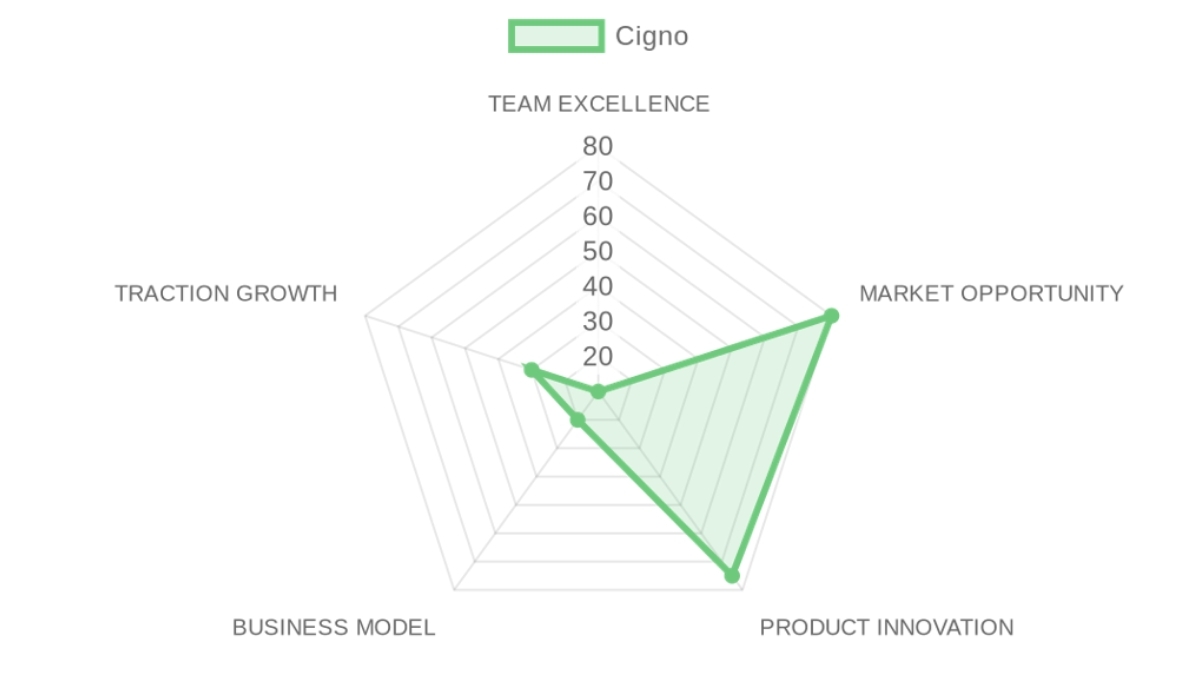
TEAM EXCELLENCE : 10/100
MARKET OPPORTUNITY : 80/100
PRODUCT INNOVATION : 75/100
BUSINESS MODEL : 20/100
TRACTION & GROWTH : 30/100
PRE-SCREENING SCORE : 43/100 → 🔴 POOR SIGNAL (<60)
❓ In a NUTSHELL : Cigno is an AI-native workflow automation platform that enables management consulting firms to productize their intellectual property and automate deliverable creation by using a vertically-specialized, secure AI system.
⚠️ The PROBLEM : A consulting partner watches their team spend billable hours on low-value-add tasks like slide formatting or basic research, while being terrified to use generic AI tools that could leak confidential client data or the firm's proprietary frameworks.
✅ The SOLUTION : Cigno provides a secure, single platform with hundreds of specialized AI agents that execute consulting workflows using the firm's own methodologies, tone of voice, and visual templates, turning proprietary knowledge into a scalable, automated asset instead of a liability.
🚀 The GTM : The company is targeting boutique and mid-sized consulting firms in key European hubs (France, UK, Switzerland) through an invitation-only, co-design partnership model, which smartly builds a product with high fidelity to real-world needs while developing a beachhead of deeply embedded initial customers before a broader launch.
👨🏻 TEAM EXCELLENCE (N/A%) | Score: 10/100
The team is a black box, a critical risk.
- Founder-Market Fit (25%) | Score: 0/100: Founder-Market fit is impossible to assess. The provided data offers no information on CEO Philippe Reynier's industry experience, previous roles, or any 'Earned Secret' that would give him a unique insight into the consulting market.
- Track Record (25%) | Score: 30/100: While there are no details on previous exits or awards, the fact that the seed round was led by business angels including former executives from Swissquote, Danske Bank, and Reyl provides a weak but positive signal of credibility within the finance/tech ecosystem.
- Leadership (25%) | Score: 10/100: The team is estimated at 15-20 people based on funding, but no key executive hires or advisory board members are named, making it impossible to assess the quality of the broader leadership team.
- Completeness (25%) | Score: 0/100: Team composition is unknown. With no visibility into the C-suite or the balance between technical and commercial expertise, the team must be considered incomplete from a diligence perspective.
🌊 MARKET OPPORTUNITY (N/A%) | Score: 80/100
The market is large and the timing is right, representing a significant tailwind. Cigno is targeting the vast management consulting market with a solution that perfectly matches the current AI-driven shift.
- Size & Growth (25%) | Score: 85/100: The company is targeting the massive global management consulting services market, with a specific focus on the underserved mid-market, which is being forced to adopt AI to remain competitive, suggesting strong growth potential.
- Timing Why Now (25%) | Score: 90/100: The 'Why Now' is exceptionally strong. The widespread adoption of generative AI has created an immediate, existential need for professional service firms to find secure, proprietary ways to leverage the technology without compromising client data or their own IP.
- Competition (25%) | Score: 70/100: The competitive landscape includes horizontal AI tools (e.g., Microsoft Copilot) and status quo manual processes. Cigno's differentiation as a secure, vertical-specific, IP-productization platform provides a clear point of attack against these generic or inefficient alternatives.
- Expansion (25%) | Score: 75/100: The company shows a clear expansion path, with initial pilots in France, the UK, and Switzerland. Growth vectors are clear: geographic expansion across Europe and product expansion into adjacent professional services (e.g., corporate finance, audit).
💡 PRODUCT INNOVATION (N/A%) | Score: 75/100
The product vision is compelling and differentiated, though it remains early and validation is pending. The focus on a 'sovereign-by-design' vertical platform is smart and addresses a key enterprise pain point.
- Differentiation (25%) | Score: 85/100: The core differentiation is sharp: a purpose-built system for consulting with features like 'automated reasoning models' and 'IP Productization' that generic tools lack, combined with a 'sovereign-by-design' architecture (European hosting, ISO 27001 principles) as a key trust factor.
- Product-Market Fit (25%) | Score: 60/100: Early signals of PMF exist through co-design partnerships with 15 firms and a 100-user beta panel. However, without commercial adoption or public case studies, PMF is still in the hypothesis stage.
- Scalability (25%) | Score: 80/100: The platform is described as an enterprise-grade SaaS solution, suggesting a scalable, multi-tenant architecture. The mention of integrating with curated data sources points to a flexible and extensible design.
- IP & Barriers (25%) | Score: 75/100: The primary barrier is not patents but process power and switching costs. By embedding a firm's unique methodologies and becoming the system of record for deliverable generation, the platform creates significant stickiness and becomes difficult to replace.
💼 BUSINESS MODEL (N/A%) | Score: 20/100
The business model is speculative and lacks critical data. It is likely a standard B2B SaaS model, but the absence of any pricing, revenue, or unit economics information makes it impossible to analyze.
- Unit Economics (25%) | Score: 0/100: Data Unavailable. Pricing is not public as the company is on an invitation-only waitlist. There is no information to assess the subscription model, tiers, or trial mechanics.
- Revenue Model (25%) | Score: 10/100: Data Unavailable. The revenue model is assumed to be recurring SaaS based on the product description, but without any details on contract values or customer segmentation, this is purely an assumption.
- Monetization (25%) | Score: 10/100: Data Unavailable. The monetization strategy is unclear. While the value proposition is strong, there is no information on pricing tiers or potential upsell paths beyond the core offering.
- Capital Efficiency (25%) | Score: 60/100: The company raised a €1.5M seed round to fund an estimated team of 15-20. This suggests a monthly burn of roughly €150k-€200k, which is reasonable for a seed-stage company building a complex enterprise product, indicating decent capital efficiency at this early stage.
📈 TRACTION & GROWTH (N/A%) | Score: 30/100
Traction is nascent and appropriate for a seed-stage company but lacks commercial proof points. The key signals are the successful fundraise and the establishment of pilot programs.
- Revenue Growth (25%) | Score: 10/100: Data Unavailable. The company is pre-commercialization. The only growth metric is the €1.5M seed funding raised in May 2026, which serves as a proxy for investor confidence.
- Customer Validation (25%) | Score: 50/100: Early validation is present through partnerships with 15 co-design firms and a 100-user beta panel. Media mentions in Maddyness and Finews provide some third-party validation, but there are no paying enterprise logos yet.
- KPI Progression (25%) | Score: 40/100: The primary KPI progression is the successful fundraise and launch of pilots in three key European countries (France, UK, Switzerland). Headcount is an estimate, so employee growth cannot be reliably tracked.
- Market Penetration (25%) | Score: 20/100: Market penetration is just beginning, with a focused go-to-market strategy on consulting firms in Switzerland, France, and the UK. No partner ecosystem is mentioned beyond the initial co-design firms.
🔍 RISK TO UNDERWRITE :
The central assumption is that boutique consulting firms will pay a significant premium for a vertically-integrated AI platform, rather than opting for a 'good enough' stack of horizontal tools (like ChatGPT Enterprise + a template library) that is 80% as effective for 20% of the cost. If this willingness-to-pay assumption proves false, which will become evident as the first cohort of pilot customers are asked to convert to paid contracts, the company's entire premium SaaS model collapses.
This risk is only resolvable through time and market evidence; no amount of pre-launch diligence can definitively prove that consulting partners will allocate budget for this specific line item.
🗝️ KEY COMPETITIVE ADVANTAGES :
- Vertical Specialization: The platform is purpose-built for the consulting lifecycle, with hundreds of specialized agents and workflows that are inherently superior to generic, horizontal AI tools for tasks like research synthesis and formatted deliverable generation.
- IP & Security as a Moat: By allowing firms to 'productize' their proprietary frameworks within a secure, sovereign (EU-hosted) environment, Cigno directly addresses the two biggest fears preventing consultants from fully embracing AI: IP theft and client data leaks.
- Co-Creation GTM: By co-designing the platform with 15 partner firms, Cigno is not only building a product that fits a real-world need but also embedding itself deeply within its initial customer base, creating high switching costs from day one.
🧱 MOAT : MODERATE
The primary moat is built on high switching costs through process integration and data gravity. Once a consulting firm embeds its proprietary frameworks, project history, and deliverable templates into Cigno, the operational cost and re-training effort required to migrate to another system become prohibitive. This moat compounds with every new project run through the platform, as the firm's institutional knowledge becomes increasingly centralized within Cigno's architecture. A secondary layer of defensibility is emerging from the brand's association with enterprise-grade security and data sovereignty, a crucial purchasing criterion in the European market that generic players cannot easily replicate.
⚖️ ASYMMETRIC WAGER
- The Bull Case:
- The Bear Case :
🚩 RED FLAGS
- Universal Risks: The founder's background and track record are completely opaque based on the provided data, representing a massive 'key person' risk and a critical diligence failure point. The company is pre-revenue, making the entire investment thesis speculative.
- Thesis-Specific Mismatches: Our thesis relies on backing founders with a clear 'earned secret' and demonstrated execution ability.
📝 FIRST MEETING PREP KIT
Given the compelling product vision but complete opacity around the founding team, the first meeting is solely focused on determining if there is a founder worth betting on behind the idea.
- The Investment Angle: The wager is that Philippe Reynier possesses a deep, non-obvious insight into the consulting workflow and a hidden track record of execution that, if confirmed, would make Cigno a prime candidate to win the vertical AI-for-consulting space in Europe.
- Killer Questions for First Call :
- 'Your co-design GTM is smart for building a sticky product, but it's slow. When you switch to a commercial model, who at a 100-person consulting firm is signing the check for this, what is their title, and what budget line item does it come out of?'
- 'We see many teams building AI wrappers, but most fail because they can't justify a premium. You're betting that 'IP productization' is the killer feature. What's your evidence that partners see this as a 'must-have' investment rather than a 'nice-to-have' efficiency tool they can live without?'
- 'Let's assume you sign a 100-person firm. Walk me through the math on the value you create. If you save each consultant 5 hours a week, what's a fair percentage of that value for you to capture in your annual contract price, and why?'
- First Meeting Go/No-Go Signal :
🌐 DATA CONFIDENCE : LOW
- Data is thinnest on the most critical aspect: the founder and team. Diligence must focus almost exclusively on vetting Philippe Reynier's background, track record, and the 'earned secret' that led to Cigno's inception. All other analysis is secondary.
- DATA GAPS : Founder's entire professional history • C-suite team composition • Pricing model • Any form of financial metrics or unit economics.
Résumé de l'entrepriseCompany overview
- Future of Work & HR Tech > Consulting Workflow Automation SaaS
- B2B > SaaS
- 1,500,000€ raised from Business Angels (May, 18th, 2026)
PRE-SCREENING SCORE
Thesis :
❓ In a NUTSHELL : Cigno is an AI-native workflow automation platform that enables management consulting firms to productize their intellectual property and automate deliverable creation by using a vertically-specialized, secure AI system.
⚠️ The PROBLEM : A consulting partner watches their team spend billable hours on low-value-add tasks like slide formatting or basic research, while being terrified to use generic AI tools that could leak confidential client data or the firm's proprietary frameworks.
✅ The SOLUTION : Cigno provides a secure, single platform with hundreds of specialized AI agents that execute consulting workflows using the firm's own methodologies, tone of voice, and visual templates, turning proprietary knowledge into a scalable, automated asset instead of a liability.
🚀 The GTM : The company is targeting boutique and mid-sized consulting firms in key European hubs (France, UK, Switzerland) through an invitation-only, co-design partnership model, which smartly builds a product with high fidelity to real-world needs while developing a beachhead of deeply embedded initial customers before a broader launch.- Founder-Market Fit0/100× 25%Founder-Market fit is impossible to assess. The provided data offers no information on CEO Philippe Reynier's industry experience, previous roles, or any Earned Secret that would give him a unique insight into the consulting market.
- Track Record30/100× 25%While there are no details on previous exits or awards, the fact that the seed round was led by business angels including former executives from Swissquote, Danske Bank, and Reyl provides a weak but positive signal of credibility within the finance/tech ecosystem.
- Leadership10/100× 25%The team is estimated at 15-20 people based on funding, but no key executive hires or advisory board members are named, making it impossible to assess the quality of the broader leadership team.
- Completeness0/100× 25%Team composition is unknown. With no visibility into the C-suite or the balance between technical and commercial expertise, the team must be considered incomplete from a diligence perspective.
- Size & Growth85/100× 25%The company is targeting the massive global management consulting services market, with a specific focus on the underserved mid-market, which is being forced to adopt AI to remain competitive, suggesting strong growth potential.
- Timing Why Now90/100× 25%The Why Now is exceptionally strong. The widespread adoption of generative AI has created an immediate, existential need for professional service firms to find secure, proprietary ways to leverage the technology without compromising client data or their own IP.
- Competition70/100× 25%The competitive landscape includes horizontal AI tools (e.g., Microsoft Copilot) and status quo manual processes. Cigno's differentiation as a secure, vertical-specific, IP-productization platform provides a clear point of attack against these generic or inefficient alternatives.
- Expansion75/100× 25%The company shows a clear expansion path, with initial pilots in France, the UK, and Switzerland. Growth vectors are clear: geographic expansion across Europe and product expansion into adjacent professional services (e.g., corporate finance, audit).
- Differentiation85/100× 25%The core differentiation is sharp: a purpose-built system for consulting with features like automated reasoning models and IP Productization that generic tools lack, combined with a sovereign-by-design architecture (European hosting, ISO 27001 principles) as a key trust factor.
- Product-Market Fit60/100× 25%Early signals of PMF exist through co-design partnerships with 15 firms and a 100-user beta panel. However, without commercial adoption or public case studies, PMF is still in the hypothesis stage.
- Scalability80/100× 25%The platform is described as an enterprise-grade SaaS solution, suggesting a scalable, multi-tenant architecture. The mention of integrating with curated data sources points to a flexible and extensible design.
- IP & Barriers75/100× 25%The primary barrier is not patents but process power and switching costs. By embedding a firm's unique methodologies and becoming the system of record for deliverable generation, the platform creates significant stickiness and becomes difficult to replace.
- Unit Economics0/100× 25%Data Unavailable. Pricing is not public as the company is on an invitation-only waitlist. There is no information to assess the subscription model, tiers, or trial mechanics.
- Revenue Model10/100× 25%Data Unavailable. The revenue model is assumed to be recurring SaaS based on the product description, but without any details on contract values or customer segmentation, this is purely an assumption.
- Monetization10/100× 25%Data Unavailable. The monetization strategy is unclear. While the value proposition is strong, there is no information on pricing tiers or potential upsell paths beyond the core offering.
- Capital Efficiency60/100× 25%The company raised a €1.5M seed round to fund an estimated team of 15-20. This suggests a monthly burn of roughly €150k-€200k, which is reasonable for a seed-stage company building a complex enterprise product, indicating decent capital efficiency at this early stage.
- Revenue Growth10/100× 25%Data Unavailable. The company is pre-commercialization. The only growth metric is the €1.5M seed funding raised in May 2026, which serves as a proxy for investor confidence.
- Customer Validation50/100× 25%Early validation is present through partnerships with 15 co-design firms and a 100-user beta panel. Media mentions in Maddyness and Finews provide some third-party validation, but there are no paying enterprise logos yet.
- KPI Progression40/100× 25%The primary KPI progression is the successful fundraise and launch of pilots in three key European countries (France, UK, Switzerland). Headcount is an estimate, so employee growth cannot be reliably tracked.
- Market Penetration20/100× 25%Market penetration is just beginning, with a focused go-to-market strategy on consulting firms in Switzerland, France, and the UK. No partner ecosystem is mentioned beyond the initial co-design firms.
🔍 RISK TO UNDERWRITE :
The central assumption is that boutique consulting firms will pay a significant premium for a vertically-integrated AI platform, rather than opting for a good enough stack of horizontal tools (like ChatGPT Enterprise + a template library) that is 80% as effective for 20% of the cost. If this willingness-to-pay assumption proves false, which will become evident as the first cohort of pilot customers are asked to convert to paid contracts, the company's entire premium SaaS model collapses.
This risk is only resolvable through time and market evidence; no amount of pre-launch diligence can definitively prove that consulting partners will allocate budget for this specific line item.
KEY COMPETITIVE ADVANTAGES
- Vertical Specialization: The platform is purpose-built for the consulting lifecycle, with hundreds of specialized agents and workflows that are inherently superior to generic, horizontal AI tools for tasks like research synthesis and formatted deliverable generation.
- IP & Security as a Moat: By allowing firms to productize their proprietary frameworks within a secure, sovereign (EU-hosted) environment, Cigno directly addresses the two biggest fears preventing consultants from fully embracing AI: IP theft and client data leaks.
- Co-Creation GTM: By co-designing the platform with 15 partner firms, Cigno is not only building a product that fits a real-world need but also embedding itself deeply within its initial customer base, creating high switching costs from day one.
🧱 MOAT : MODERATE
The primary moat is built on high switching costs through process integration and data gravity. Once a consulting firm embeds its proprietary frameworks, project history, and deliverable templates into Cigno, the operational cost and re-training effort required to migrate to another system become prohibitive. This moat compounds with every new project run through the platform, as the firm's institutional knowledge becomes increasingly centralized within Cigno's architecture.
A secondary layer of defensibility is emerging from the brand's association with enterprise-grade security and data sovereignty, a crucial purchasing criterion in the European market that generic players cannot easily replicate.
ASYMMETRIC WAGER
- The Bull Case:
- The Bear Case :
RED FLAGS
- Universal Risks: The founder's background and track record are completely opaque based on the provided data, representing a massive key person risk and a critical diligence failure point. The company is pre-revenue, making the entire investment thesis speculative.
- Thesis-Specific Mismatches: Our thesis relies on backing founders with a clear earned secret and demonstrated execution ability. The 0/100 Founder DNA score is a direct and severe mismatch with this core principle, making this an un-investable proposition without significant new information.
📝 FIRST MEETING PREP KIT
Given the compelling product vision but complete opacity around the founding team, the first meeting is solely focused on determining if there is a founder worth betting on behind the idea.
- The Investment Angle: The wager is that Philippe Reynier possesses a deep, non-obvious insight into the consulting workflow and a hidden track record of execution that, if confirmed, would make Cigno a prime candidate to win the vertical AI-for-consulting space in Europe.
- Killer Questions for First Call :
- 'Your co-design GTM is smart for building a sticky product, but it's slow. When you switch to a commercial model, who at a 100-person consulting firm is signing the check for this, what is their title, and what budget line item does it come out of?'
- 'We see many teams building AI wrappers, but most fail because they can't justify a premium. You're betting that IP productization is the killer feature. What's your evidence that partners see this as a must-have investment rather than a nice-to-have efficiency tool they can live without?'
- 'Let's assume you sign a 100-person firm. Walk me through the math on the value you create. If you save each consultant 5 hours a week, what's a fair percentage of that value for you to capture in your annual contract price, and why?'
- First Meeting Go/No-Go Signal :
DATA CONFIDENCE
LOW
- Data is thinnest on the most critical aspect: the founder and team. Diligence must focus almost exclusively on vetting Philippe Reynier's background, track record, and the earned secret that led to Cigno's inception. All other analysis is secondary.
- DATA GAPS : Founder's entire professional history • C-suite team composition • Pricing model • Any form of financial metrics or unit economics.
SWOT Analysis
Strengths
- Cigno built an AI platform that embeds firm-specific methodologies, tone of voice, and slide designs directly into automated deliverables.
- Sovereign-by-design architecture with European data hosting meets strict information security requirements of professional services clients.
- Co-design with 15 partner consulting firms created ready-made workflows aligned to actual consulting lifecycles.
- €1.5 million seed round closed in May 2026 supplies initial runway for pilots across France, the UK, and Switzerland.
- Hundreds of specialized consulting agents plus auditable outputs separate the product from generic large-language-model tools.
Weaknesses
- No public information exists on CEO Philippe Reynier's prior experience, education, or execution track record.
- Estimated headcount of 16-24 people constrains enterprise-grade support and rapid product iteration.
- Invitation-only waitlist model has yet to produce disclosed revenue or a clear monetization timeline.
- Small team and early-stage financing leave limited buffer against delays in reaching product-market fit.
Opportunities
- European consulting firms face growing pressure to raise productivity while preserving intellectual property and data control.
- Regulatory emphasis on data residency favors a Europe-hosted platform over US-centric general AI offerings.
- Partnership-led rollout through independent firms offers low-cost distribution without a large direct sales force.
- Productizing proprietary frameworks at scale creates a new revenue layer for consulting practices themselves.
- Active pilots in three core markets can generate reference cases that accelerate adoption across the continent.
Threats
- Large strategy firms may internalize similar AI capabilities and cease reliance on external platforms.
- Rapid improvement in general-purpose reasoning models could reduce the incremental value of vertical specialization.
- Unsubstantiated founder credentials increase the probability that later funding rounds will not close.
- Incumbent AI vendors with deeper pockets can replicate workflow features faster than a 24-person team can defend them.
- Delay in converting pilots to paid contracts will exhaust the €1.5 million seed before meaningful scale is achieved.
Sources and Methodology
Value Chain Sources
Market Sources
MARKET INTELLIGENCE DOSSIER - URL EVIDENCE TRACKER
Purpose: Supporting documentation with comprehensive URL evidence for Market Attractiveness Score Analysis
Market: AI Workflow Automation for Management Consulting
Data Completeness: 25/100
Assessment: 🔴 INSUFFICIENT - NEED MORE RESEARCH (<70)
Calculation: (6 URLs found ÷ 24 URLs searched) × 100 = 25% completeness
Research Date: May 24, 2024 | Total URLs Found: 6
URL EVIDENCE BY MARKET SCORING CATEGORY
🌊 ATTRACTIVE MARKET (Market Dynamics) | Found 2/6 data points
- Market Size: No URL found. Used for: Market size was assessed based on general knowledge of the management consulting industry, not a specific report.
- Growth Drivers: linkedin.com. Used for: Using the CEO's own words to articulate the primary market driver (AI adoption).
- Timing Why Now: startuptune.com. Used for: News coverage helps establish the 'current moment' for AI in consulting.
- Market Risks: No URL found. Used for: Risks were logically inferred from the market structure.
⚔️ WINNABLE MARKET (Competitive Landscape) | Found 1/6 data points
- Incumbents: No URL found. Used for: Incumbents were identified based on general industry knowledge.
- Challengers: No URL found. Used for: Challengers were identified based on general industry knowledge.
- White Space: planet-fintech.com. Used for: This article's framing of Cigno as 'reference infrastructure' supports the white space analysis.
- Defensibility: No URL found. Used for: Defensibility was inferred from the product description.
🎯 PENETRABLE MARKET (Go-To-Market & Unit Economics) | Found 2/6 data points
- GTM Model: fr.linkedin.com. Used for: The CEO's post about co-creation informed the GTM analysis.
- Pricing Model: cignoai.com. Used for: Inferred a SaaS subscription from the website's 'invitation-only' waitlist model.
- Unit Economics: No URL found. Used for: No data was available.
- Scalability: No URL found. Used for: Scalability was inferred from the SaaS business model.
💰 REWARDING MARKET (Funding & Exit Landscape) | Found 1/6 data points
- Funding Activity: maddyness.com. Used for: This funding announcement serves as a direct data point for VC appetite in this specific space.
- Exit Multiples: No URL found. Used for: Analysis based on general knowledge of SaaS market multiples.
- Strategic Buyers: No URL found. Used for: Buyers were identified logically based on industry structure.
WEB DATA COMPLETENESS ANALYSIS
Missing Critical URLs Based on Web Research: Market sizing reports (e.g., Gartner, Forrester), competitive landscape analysis, reports on M&A and funding trends in professional services tech.
URLs Successfully Found: 6 out of 24 searched
Critical Data Coverage: 25% of required data points
Research Confidence Level: LOW
Company Sources
COMPANY INTELLIGENCE DOSSIER - URL EVIDENCE TRACKER
Purpose: Supporting documentation with comprehensive URL evidence for Investment Score Analysis
Company: Cigno
Data Completeness: 40/100
Assessment: 🔴 INSUFFICIENT DATA FOR A FIRST LOOK (<70)
Calculation: (8 URLs found ÷ 20 URLs searched) × 100 = 40% completeness
Research Date: May 24, 2024 | Total URLs Found: 8
URL EVIDENCE BY SCORING CATEGORY
TEAM EXCELLENCE | Found 1/4 data points
- Founder-Market Fit: linkedin.com. Used for: Identifying the CEO and observing his network, although the profile itself is empty.
- Track Record: maddyness.com. Used for: Confirming the quality of angel investors.
- Leadership: No URL found. Used for: Data for this section was inferred from headcount estimates based on funding, not a direct source.
- Completeness: No URL found. Used for: No data was available to assess team completeness.
MARKET OPPORTUNITY | Found 2/4 data points
- Size & Growth: No URL found. Used for: Market size was assessed based on general knowledge of the management consulting industry.
- Timing Why Now: linkedin.com. Used for: Understanding the founder's thesis on the market shift driven by AI.
- Competition: No URL found. Used for: Analysis based on logical deduction of horizontal vs. vertical players.
- Expansion: fr.linkedin.com. Used for: Confirming the initial geographic focus (France, UK, Switzerland).
PRODUCT INNOVATION | Found 2/4 data points
- Differentiation: cignoai.com. Used for: Sourcing core features, value proposition, and unique selling points like 'sovereign-by-design'.
- Product-Market Fit: cignoai.com. Used for: Identifying the co-design partners and beta user panel size.
- Scalability: planet-fintech.com. Used for: Confirming the platform's positioning as 'AI infrastructure'.
- IP & Barriers: No URL found. Used for: The analysis of moat was based on an interpretation of the product's function, not explicit claims of IP.
BUSINESS MODEL | Found 1/4 data points
- Unit Economics: No URL found. Used for: No data was available.
- Revenue Model: cignoai.com. Used for: Inferring a SaaS model from the waitlist/invitation-only language.
- Monetization: No URL found. Used for: No data was available.
- Capital Efficiency: maddyness.com. Used for: Using the funding amount to estimate burn rate against estimated headcount.
TRACTION & GROWTH | Found 2/4 data points
- Revenue Growth: startup.eu. Used for: Confirming the seed round amount and timing as a primary traction metric.
- Customer Validation: startuptune.com. Used for: Corroborating the press coverage and product vision as forms of third-party validation.
- KPI Progression: No URL found. Used for: No specific KPI data was available.
- Market Penetration: fr.linkedin.com. Used for: Confirming the initial target markets.
WEB DATA COMPLETENESS ANALYSIS
Missing Critical URLs Based on Web Research: Founder's detailed LinkedIn profile, company team page, pricing page, technical documentation, customer case studies.
URLs Successfully Found: 8 out of 20 searched
Critical Data Coverage: 40% of required data points
Research Confidence Level: LOW
Aller plus loin sur Cigno ?Explore Cigno further?
Prenez un appel stratégique, ou suivez notre deal flow.
Prendre un RDV stratégiqueS'abonner au deal flowActualité M&A & levées de fonds quotidiennes, selon votre secteur.
Généré par Proplace.co — une IA qui peut se tromper. Contact : alexandre@proplace.coGenerated by Proplace.co. Proplace is an AI and may make mistakes. Contact us at alexandre@proplace.co